Backflow Testing & Prevention in Hamilton, OH
Backflow testing in Hamilton, OH checks that the device protecting the drinking water supply from contamination still works. A backflow preventer stops water that has touched fertilizer, boiler chemicals or other hazards from being pulled back into the public water lines when pressure drops.
Ohio rules call for a test on every testable device, so most owners book it once a year. Call (513) 796-9381 to schedule.
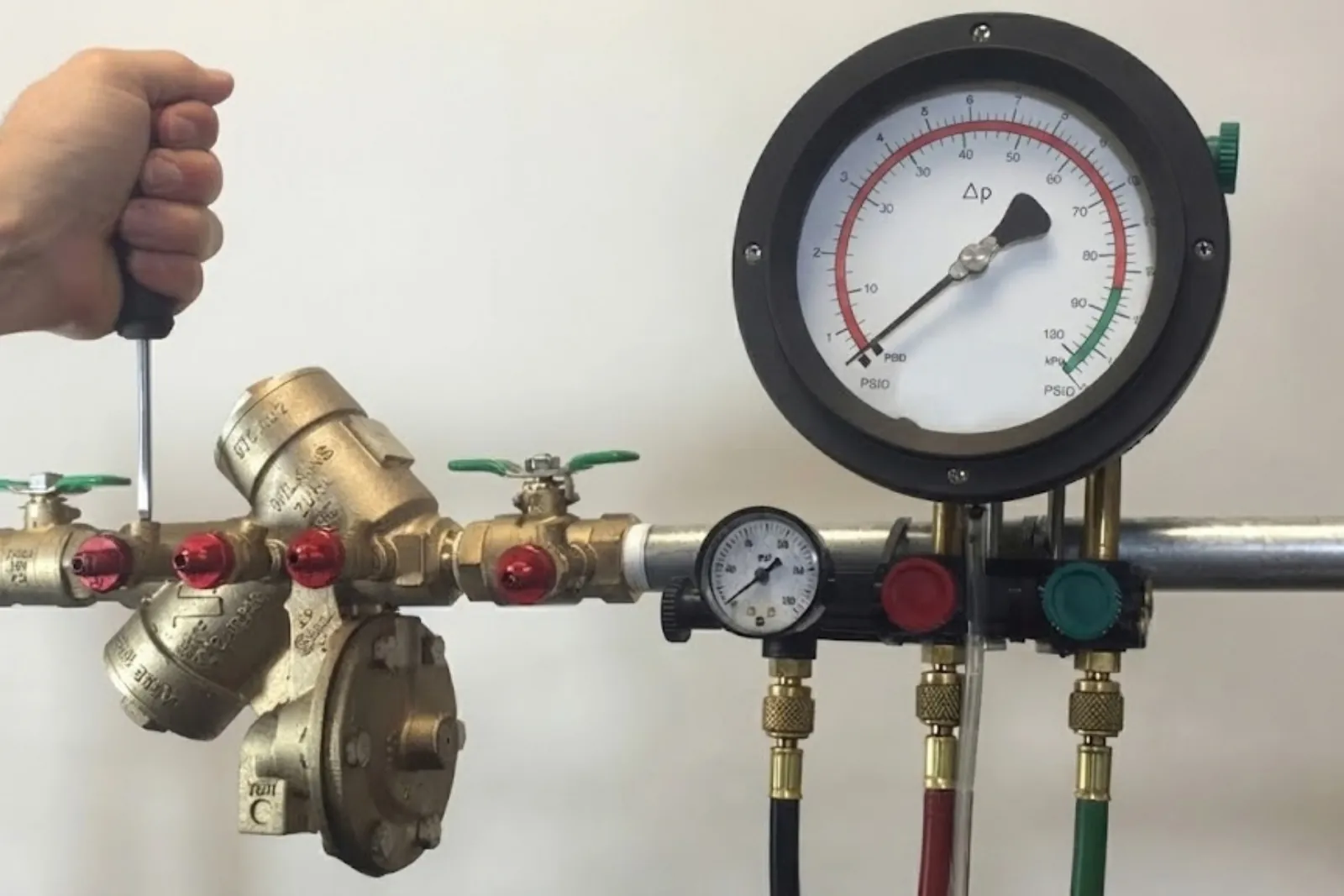
Why backflow protection matters
Normally water flows one way, from the main into the building. Water can reverse when pressure drops, for example when crews open a hydrant or a main breaks. With no device in place, the pressure drop can siphon water back from anything connected. A lawn system sitting in fertilized soil is the classic example.
Hamilton draws its water from wells about 210 feet deep in the Great Miami Buried Valley Aquifer. The city treats it at its North and South plants. Backflow protection keeps anything from fouling that treated water once it is in the pipes.
The rule behind the yearly test
Ohio Administrative Code Chapter 3745-95 calls for a test on every backflow device at least once every twelve months. Water utilities track testable devices and send reminders. The tester then reports each result to the water supplier.
A tester uses a calibrated gauge to measure pressure differences across the check valves and relief valve. If it fails, the tester rebuilds or repairs it and tests it again.
Types of backflow devices
| Device | Where it is used | Testable? |
|---|---|---|
| Pressure vacuum breaker (PVB) | Many residential irrigation systems | Yes, annually. |
| Double check valve assembly | Lower-hazard commercial connections, fire lines | Yes, annually. |
| Reduced pressure zone assembly (RPZ) | High-hazard connections such as boilers and chemical systems | Yes, annually. |
| Hose bib vacuum breaker | Outdoor faucets | No, but should be present. |
What to do about common cross-connections at home
- Lawn irrigation systems.
- Garden hoses left submerged in a pool, bucket or sprayer.
- Water-powered backup sump pumps.
- Boilers with chemical treatment.
- Hose-end chemical sprayers.
A water-powered sump backup is one example people rarely think about. Our sump pump page covers why it needs backflow protection.
What a failed test usually means
Most failures come from debris lodged in a check valve, worn rubber parts, or a relief valve that no longer opens at the right pressure. Construction work on a water main often sends grit through the lines that ends up in these devices.
Many devices can be rebuilt with a kit rather than replaced, which costs less. A device that is badly corroded, frozen and cracked, or discontinued is usually replaced. Freezing damages irrigation devices more than any others. Drain and winterize them each fall before the first hard frost.
Backflow service in Hamilton and nearby
We test and repair backflow devices in ZIP codes 45011, 45013 and 45015, for homes and small businesses. Businesses with several devices can book them all in one visit, which our commercial plumbing page covers. Irrigation-heavy subdivisions in Liberty Township are among the most common residential test calls.
What backflow service costs depends on
A routine test is straightforward. Repairs and new devices vary.
- Device type and size.
- Number of devices on the property.
- Repair or rebuild if it fails.
- New installation where a device is missing.
- Access, such as a device in a pit or tight space.
Testing and device maintenance are owner costs and not covered by insurance.
Want your real number? Call (513) 796-9381 and describe what you are seeing.
Backflow test due? Schedule it now.
Call (513) 796-9381Backflow testing questions
At least once every twelve months under Ohio Administrative Code Chapter 3745-95.
Yes. Irrigation systems are among the most common cross-connections in homes.
The tester repairs or rebuilds it, tests it again, and reports the result to the water supplier.
No. The test needs a calibrated gauge, and a certified tester has to file the report.
For a standard outdoor faucet, it is the right protection and does not need annual testing.