Buying a Pre-1920 Hamilton Home: The Plumbing Inspection Checklist
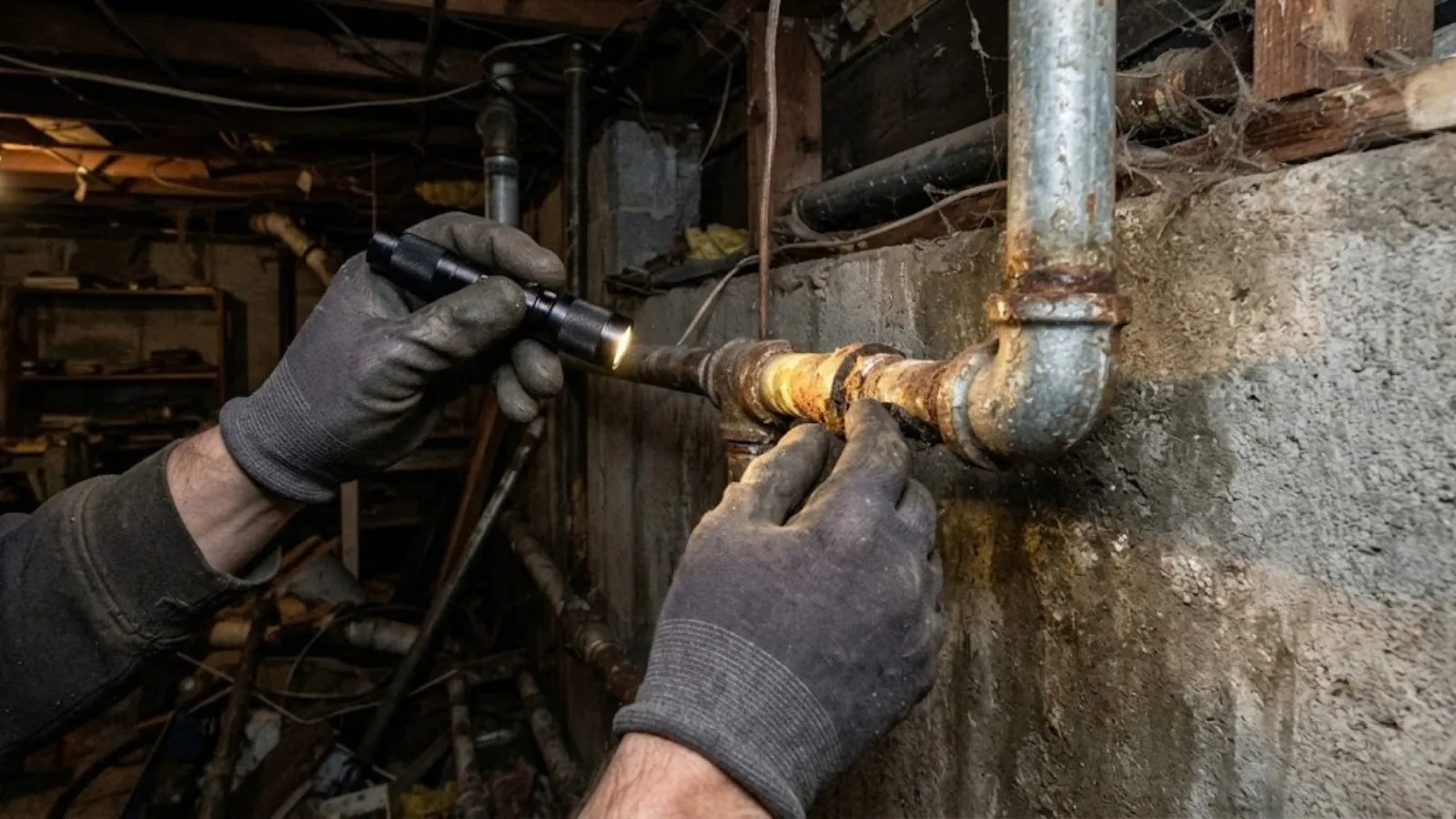
Before you buy an older Hamilton house, check five plumbing systems: the water service line from the street, the sewer lateral to the city main, the cast iron drain stack, the supply pipes inside the walls, and the water heater and its venting. A general home inspection often looks at only some of these, and the sewer lateral in particular is usually invisible without a camera.
This checklist explains what to look at, why it matters in Hamilton specifically, and roughly how each finding should shape your offer.
1. The water service line
Many older Hamilton addresses may still have a lead service line. Look the address up on the city's public service-line map, then look at the pipe where it enters the basement. Lead is dull gray, soft, and scratches to shiny silver, and a magnet will not stick to it.
The city's lead program covers the public side from the main to the curb stop. The private side into the house is the owner's, which after closing means you. If the line is lead, factor private-side replacement into your budget. Our page on water line replacement explains what that involves.
2. The sewer lateral
Under Hamilton city code section 931.031, the owner is responsible for the entire sanitary lateral from the house to the public sewer, including the part under the street. In older neighborhoods, many laterals are clay tile with root intrusion at the joints.
A sewer camera inspection before closing is one of the best-value checks you can buy. It shows the pipe material, roots, sags and breaks. A root-invaded but intact line is a maintenance item. A broken or collapsed line is a repair that can be negotiated. Our sewer line repair page explains the repair options a camera finding might lead to.
3. The drain stack and building drain
Look at the base of the main cast iron stack in the basement for rust stains, weeping joints or vertical cracks. Check where the horizontal drain leaves the house. A damp patch on the basement floor or a sewer smell deserves a closer look.
The bottom of a horizontal cast iron pipe wears first and can be rotted through while the top looks fine, so the same camera inspection should cover the building drain, not just the lateral.
4. Supply pipes inside the house
Galvanized steel supply pipe was standard for decades. Signs it is still present include gray threaded pipe in the basement, low pressure at upstairs fixtures, and brown water when a tap first opens. Some houses have been partly repiped, with copper or PEX in some areas and galvanized in others.
Galvanized lines narrow as they rust from the inside and leak at the threads, and they can hold lead particles if they were downstream of a lead service line. Full replacement is usually the lasting fix.
5. The water heater and its venting
Check the heater's age from the label. Tanks commonly last about eight to twelve years. Then look at the venting. In older houses a gas water heater often shares a masonry chimney with the furnace. If the furnace has been replaced with a high-efficiency model that vents out the side of the house, the water heater may now be alone in a chimney sized for two appliances, which can cause poor draft.
Rust at the draft hood or soot on the tank top are warning signs worth asking about before you close.
The checklist in one place
- Service line material on the city map, confirmed at the basement wall.
- Sewer camera inspection of the building drain and lateral, with footage.
- Cast iron stack and building drain condition.
- Supply pipe material and water pressure at the highest fixture.
- Water heater age, venting and relief valve discharge pipe.
- Main shutoff location and whether it actually closes.
- Signs of past water damage on basement ceilings under bathrooms.
How findings affect your offer
| Finding | Typical approach |
|---|---|
| Lead service line | Budget for private-side replacement or negotiate a credit. |
| Roots in an intact clay lateral | Plan regular cleaning, not usually a price issue. |
| Broken or collapsed lateral | Negotiate repair or a credit before closing. |
| Galvanized supply throughout | Budget for a repipe within a few years. |
| Water heater over 12 years old | Plan for replacement soon. |
Older homes in other nearby towns, such as Oxford, deserve the same checks, adjusted for their own water system and sewer rules.
What to do on the walkthrough before you make an offer
- Run every faucet on hot and cold at the same time as a flushing toilet and watch the pressure.
- Look at the ceiling below every bathroom for stains or patched drywall.
- Find the main shutoff and ask whether it has been tested recently.
- Check under every sink for stains, soft cabinet floors and old supply lines.
- Look at the base of the main drain stack and around the floor drain.
None of these replaces an inspection, but they tell you where to point the inspector and which specialists to bring in.
Using findings in negotiation without losing the house
Plumbing findings in an older house are rarely surprises to a seller who has lived there for decades. What helps most is specifics: a camera video showing a broken lateral, a clear photo of lead at the meter, or a written estimate for a repipe. A specific finding with a price attached is easier for a seller to accept than a general concern.
Buyers often choose between a price reduction, a closing credit, or a seller-completed repair. For work like a lateral repair or water line replacement, a credit is often better, because it lets you choose who does the work and how.
Keep in mind that in Hamilton, the owner at the time a lateral fails pays for it, under city code section 931.031. Anything you find before closing is the last chance to share that cost.
Plan the first year after you move in
Even when nothing fails the inspection, an older house benefits from a short plan. Replace old washing machine hoses with braided ones, replace any seized shutoff valves, flush the water heater, and schedule a lateral cleaning before spring if roots were seen. These small steps cost little and prevent the most common first-year calls.
Frequently asked questions
Usually not. It is typically a separate service and well worth it on an older Hamilton home.
The owner, under Hamilton code section 931.031. That is why checking before closing matters.
Not usually, but it should be budgeted for, since it will need replacing.
Check the city's public service-line map, then confirm at the pipe in the basement.