Cast Iron Drain Stacks in Dayton Lane and German Village: Repair, Line or Replace?
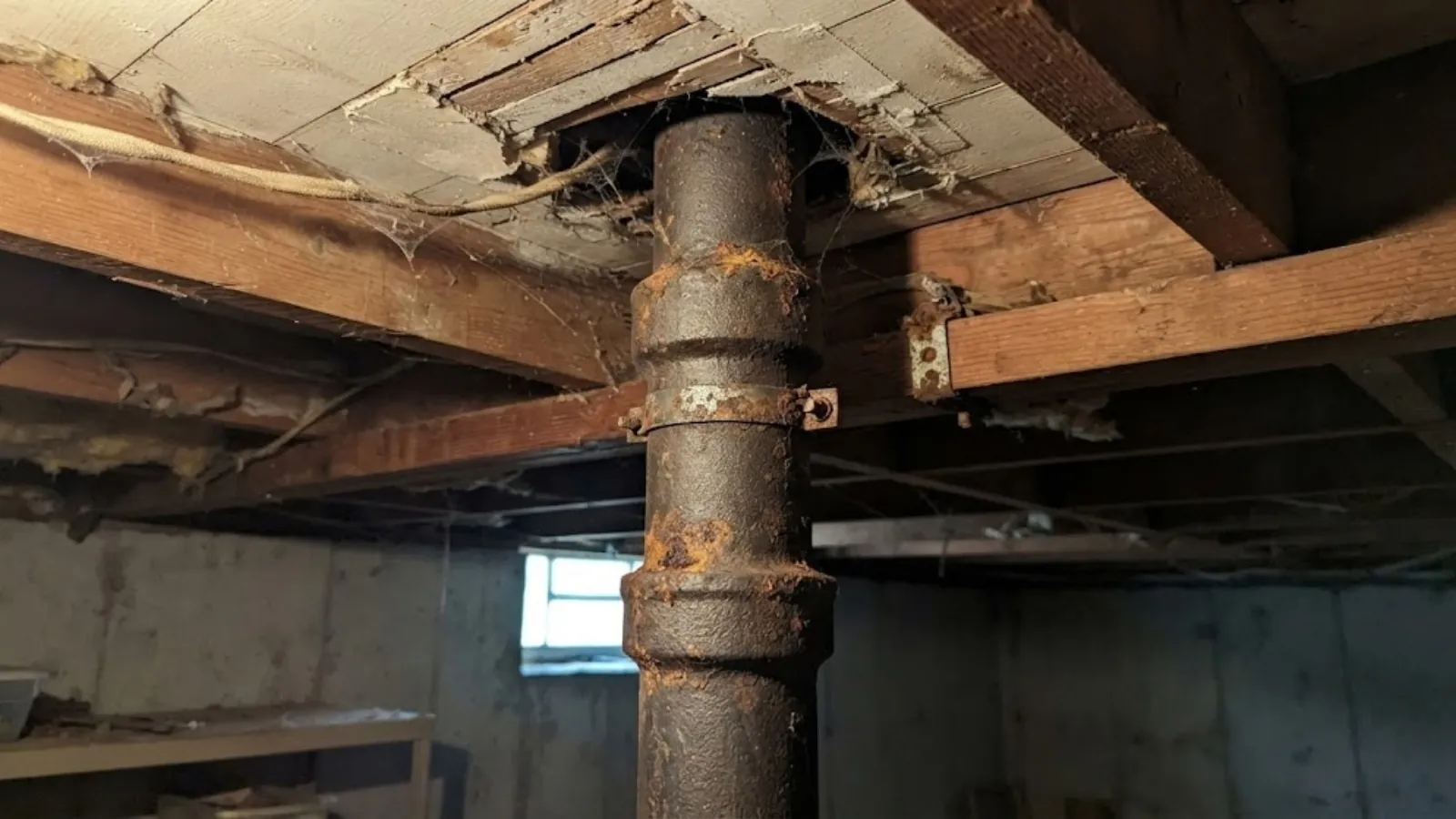
Most homes in Hamilton's historic districts drain through cast iron: a vertical stack running from the roof vent down through the house, and a horizontal building drain under or across the basement. Cast iron can last a century, but by now many of these systems show rust, cracks and scale. Whether to repair, line or replace depends on how much of the system is failing and where.
This guide explains how cast iron fails, how to tell which situation you are in, and what each option costs you in disruption.
Why so much cast iron in these neighborhoods
The Dayton Lane Historic District holds more than 210 homes in Queen Anne, Italianate, Second Empire and Georgian Revival styles, many built for Hamilton's industrialists around the turn of the last century. German Village, listed on the National Register in 1991, holds 177 contributing buildings. Rossville's commercial district dates to the 1800s.
Houses of that age were drained with cast iron hub-and-spigot pipe, joined with oakum and poured lead. The material is heavy and quiet, which is part of why it lasted. But after 100 years or more, even good cast iron reaches the end.
How cast iron fails
Cast iron does not usually fail all at once. It gives warning signs.
| Sign | What is happening | How serious |
|---|---|---|
| Rust stains or weeping at a joint | Joint seal breaking down | Often a local repair. |
| Vertical crack along the pipe | Pipe wall has split | Replace that section. |
| Slow drains throughout the house | Scale and rust narrowing the pipe inside | Cleaning or lining may help. |
| Sewer smell in the basement | Crack, failed joint or dry trap | Needs a camera look. |
| Water at the base of the stack | Bottom of the horizontal pipe rusted through | Serious, usually replacement of that run. |
The bottom of horizontal cast iron wears first because that is where water and solids travel. A pipe can look sound from above while the underside has thinned or rotted through.
Start with a camera, not a guess
Before choosing any repair, the drain should be cleared and inspected with a camera from a cleanout or a removed fixture. The footage shows scale, cracks, holes in the bottom of the pipe and failed joints, and it shows how much of the system is affected.
The Ohio Plumbing Code, based on the 2021 International Plumbing Code (IPC), requires accessible cleanouts on the building drain and at the base of stacks. Many historic homes lack a usable one, and adding it is often the first step because it makes every future inspection and cleaning easier.
Three options, and when each fits
- Section repair. One cracked length or failed joint is cut out and replaced with new pipe and shielded couplings. Best when the rest of the stack is sound.
- Lining. A resin liner cured inside the old pipe creates a new pipe within it. It can work for scaled or cracked lines that still hold their shape, with minimal wall opening. It cannot fix a pipe with a missing bottom or a collapse.
- Replacement. The old stack or building drain is removed and replaced, usually with PVC or new cast iron. It is the lasting answer when problems run the full length.
In plaster-walled homes, replacement means opening walls, and that restoration cost matters as much as the plumbing cost. That is why the camera's findings drive the decision.
The building drain under the basement floor
The horizontal drain often runs under the basement slab to the front wall and out to the lateral. When it fails there, the signs are a damp spot on the basement floor, a sewer smell, or repeated backups. Repairing it means cutting the concrete, or in some cases lining from inside.
Beyond the foundation, the clay lateral to the street is a separate pipe with the same age problems. Under Hamilton code section 931.031 it is also the owner's responsibility. Our sewer line replacement page covers what happens when the lateral has failed along its length.
Keeping an old stack working longer
- Do not use caustic chemical drain cleaners, which attack old iron.
- Have slow drains cleared mechanically before a full blockage.
- Run water in rarely used fixtures so traps stay full and sewer gas stays out.
- Watch the stack's base in the basement for rust stains or damp.
When a line in an older house does clog, drain cleaning with the right cutter head clears it without damaging the pipe.
Beyond the historic districts
Cast iron drains show up in older houses throughout the area, not just in Hamilton's three historic districts. The older village core in Trenton has homes of a similar vintage with similar issues.
What to do if the stack starts leaking
- Stop using fixtures that drain into that stack until it is checked.
- Place a container under the leak and keep the area dry.
- Photograph the crack or weeping joint for the plumber and your insurer.
- Do not try to seal a cracked cast iron pipe with tape or putty as a permanent fix.
A small weep at a joint can sometimes wait a few days for a scheduled repair. A crack that drips steadily or a hole in the bottom of a horizontal pipe should be handled promptly, since waste water will soak into framing and flooring below.
Noise, weight and what replacement feels like in an old house
Cast iron is quiet because it is heavy and dense. PVC is lighter and louder, and water running through a PVC stack in a bedroom wall can be noticeable. Owners replacing a stack that runs through living spaces sometimes choose new no-hub cast iron for that section and PVC in the basement, or wrap PVC in sound-deadening insulation.
Old cast iron is also heavy to remove. A section of four-inch stack weighs a lot, and it has to be supported at each floor while it is cut out. Plan for dust, some plaster repair and a day or more without the fixtures on that stack. Scheduling the work before a planned bathroom remodel avoids opening the same walls twice.
Frequently asked questions
Often 80 to 100 years or more, depending on water, use and installation. Many historic Hamilton homes are at or past that range.
Some sections can be reached from basements and closets, and lining can avoid wall openings where it fits. Full replacement usually needs some wall access.
Yes, PVC is widely used. Some owners keep cast iron for quiet in living areas.
Drain replacement is permitted work in Hamilton, pulled under a city Master Registration.