How to Check That Your Plumber Holds a Hamilton Master Registration
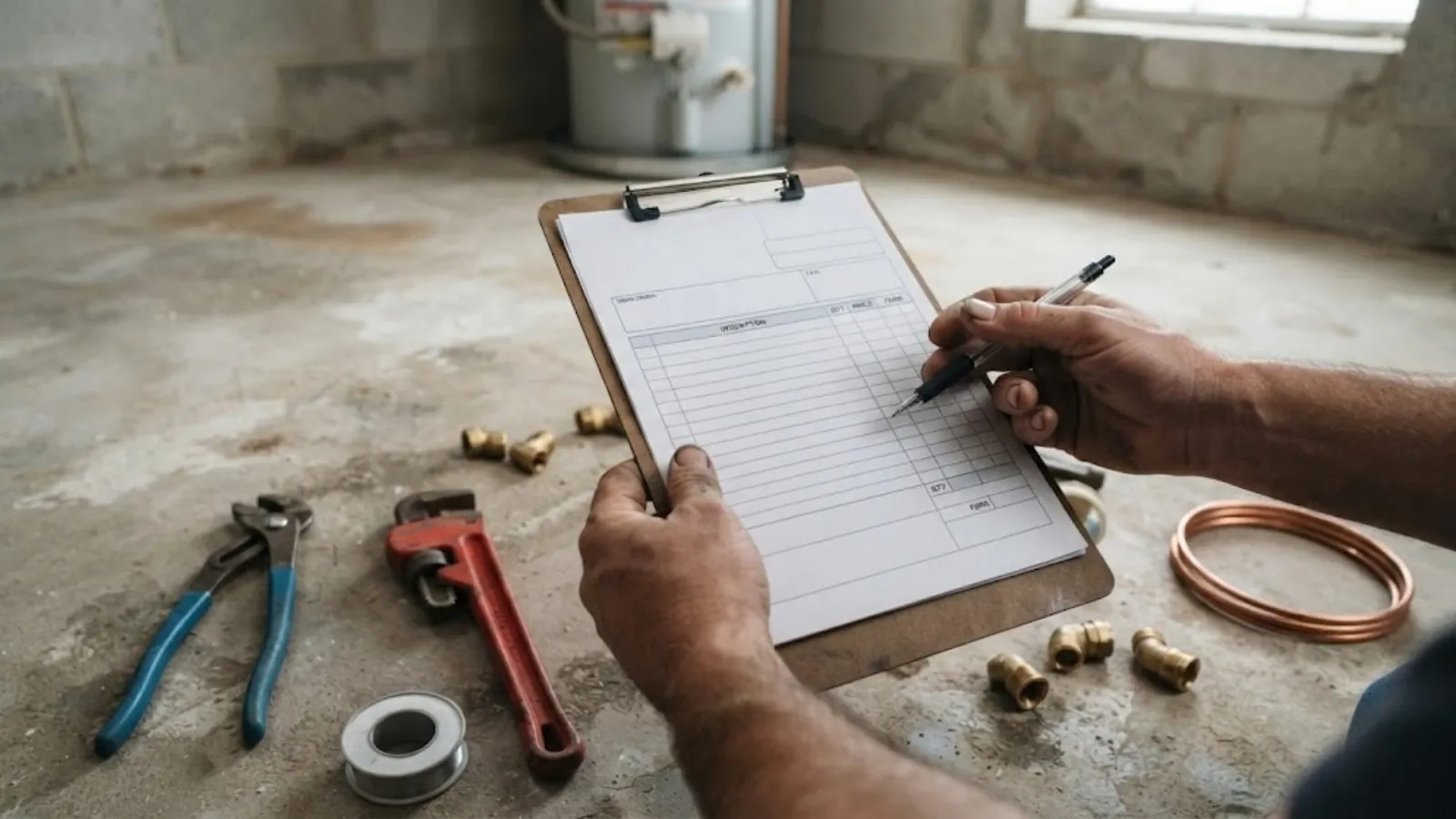
In the City of Hamilton, any plumbing, gas or sewer work that needs a permit falls under a city Contractor Registration. Only the Master Registration holder, or their authorized representative, can apply for that permit. You can check a contractor by asking whose registration the permit will be pulled under and confirming the name on the city's published contractor list.
Outside the city limits the rules shift to Butler County. Here is how the system works, what to ask, and the warning signs to watch for.
How plumbing is regulated in Ohio
Ohio splits plumbing oversight between the state and local governments. The Ohio Construction Industry Licensing Board licenses commercial plumbing contractors. Residential plumbing is permitted and inspected locally, under the Ohio Plumbing Code, which is based on the 2021 International Plumbing Code (IPC).
That means the local rules are what count for most homeowners. In Hamilton, the city runs its own registration and permit system. Across most of the rest of Butler County, plumbing permits come from the Butler County General Health District, which issues plumbing permits countywide except within the cities of Hamilton and Middletown.
What Hamilton requires
| Item | What it means for you | How to check |
|---|---|---|
| Contractor Registration | Required for plumbing, gas and sewer work that needs a permit | Ask the contractor, then check the city's list. |
| Master Registration holder | The individual who can apply for the permit | Ask for the name on the registration. |
| Permit before work | The permit must be obtained before the work starts | Ask to see it, or look for it posted on site. |
| Inspection | The city inspects permitted work | Do not close walls or trenches before it passes. |
Hamilton also allows certain owner-occupant exemptions for work on your own home, which is a separate path from hiring a contractor.
Which jobs usually need a permit
Routine repairs, such as replacing a faucet cartridge, a toilet flapper or a trap, generally do not. Work that changes or replaces system components generally does. That typically includes replacing a water heater, installing or altering gas piping, replacing a sewer lateral or building drain, replacing a water service line, and adding new fixtures or relocating drains in a remodel.
If a quote for a water heater replacement or a sewer line replacement leaves out the permit, ask why. The permit and inspection are part of the job, not an optional extra.
Five questions to ask before work begins
- Whose Master Registration will the permit be pulled under?
- Will the permit be pulled before the work starts?
- Who schedules the inspection, and will anything be covered before it passes?
- Is the price you quoted inclusive of the permit fee?
- If the job is commercial, what is your Ohio contractor license number?
A contractor who answers these clearly is usually one who works within the system. Hesitation on the first two is a warning sign.
Warning signs
Be cautious if someone suggests skipping the permit to save money. The same goes for anyone who wants full payment upfront, cannot name the registration holder, or pushes you to decide on the spot for a non-emergency job. Unpermitted work can surface during a home sale inspection, and some insurers may question a claim tied to work that was never inspected.
This advice applies to any contractor, including us. We would rather you check than trust.
Outside the city: Butler County rules
For homes in Fairfield, Oxford, Trenton and the townships, the Butler County General Health District issues plumbing permits. It also requires anyone doing plumbing or sewage work there to register with the district. Homeowners in Fairfield and nearby communities can ask the same questions above, substituting the health district's registration for the city's.
What to do before hiring anyone for permitted work
- Get the scope in writing, including whether the permit fee is included.
- Confirm the name on the Master Registration against the city's contractor list.
- Agree on a payment schedule tied to progress, not full payment upfront.
- Ask when the inspection will happen and make sure nothing is covered before it passes.
- Keep the permit number and final inspection record with your house papers.
Those records matter later. A buyer's inspector may ask when the water heater or sewer line was replaced and whether it was permitted, and having the paperwork answers that in seconds.
What an inspection actually checks
For a water heater replacement, the inspector typically looks at the venting and draft, the gas connection and shutoff, the relief valve and the pipe that carries its discharge, and the water connections. For a sewer lateral, the inspector usually wants to see the pipe, its bedding and the connection before the trench is backfilled.
For a water service line, the inspection covers depth, material and the connection at both ends. These checks exist because problems in any of them are expensive or dangerous to find later. A contractor who welcomes the inspection is usually one confident in the work.
If an inspection fails, the contractor corrects the issue and it is re-inspected. That is a normal part of the process, not a sign of disaster, as long as the contractor fixes it properly.
Emergencies and permits
In a true emergency, such as a leaking water heater or a sewer backup, the priority is stopping the damage. A contractor can make the house safe and usable first, then pull the permit for the permanent repair promptly. After an emergency visit, ask who will pull the permit so nobody forgets it once the pressure is off.
Keep receipts and any photos from emergency work with the permit record. Together they show a future buyer or insurer exactly what happened and when it was fixed properly.
Frequently asked questions
Ohio licenses commercial plumbing contractors through the OCILB. Residential plumbing is regulated locally through registration and permits.
The Butler County General Health District, except within the cities of Hamilton and Middletown.
Hamilton has an owner-occupant exemption for certain work on your own home. Check with the city's building department before starting.
For small repairs, no. For water heaters, gas lines, sewer and water line work, it is worth questioning.
The permit should be under the Master Registration of the business actually doing the work. If the names do not match, ask why before work starts.
The City of Hamilton publishes its list of registered contractors through its building department's contractor registration page.