Do You Need a Water Softener in Hamilton? City Water vs. Well Water
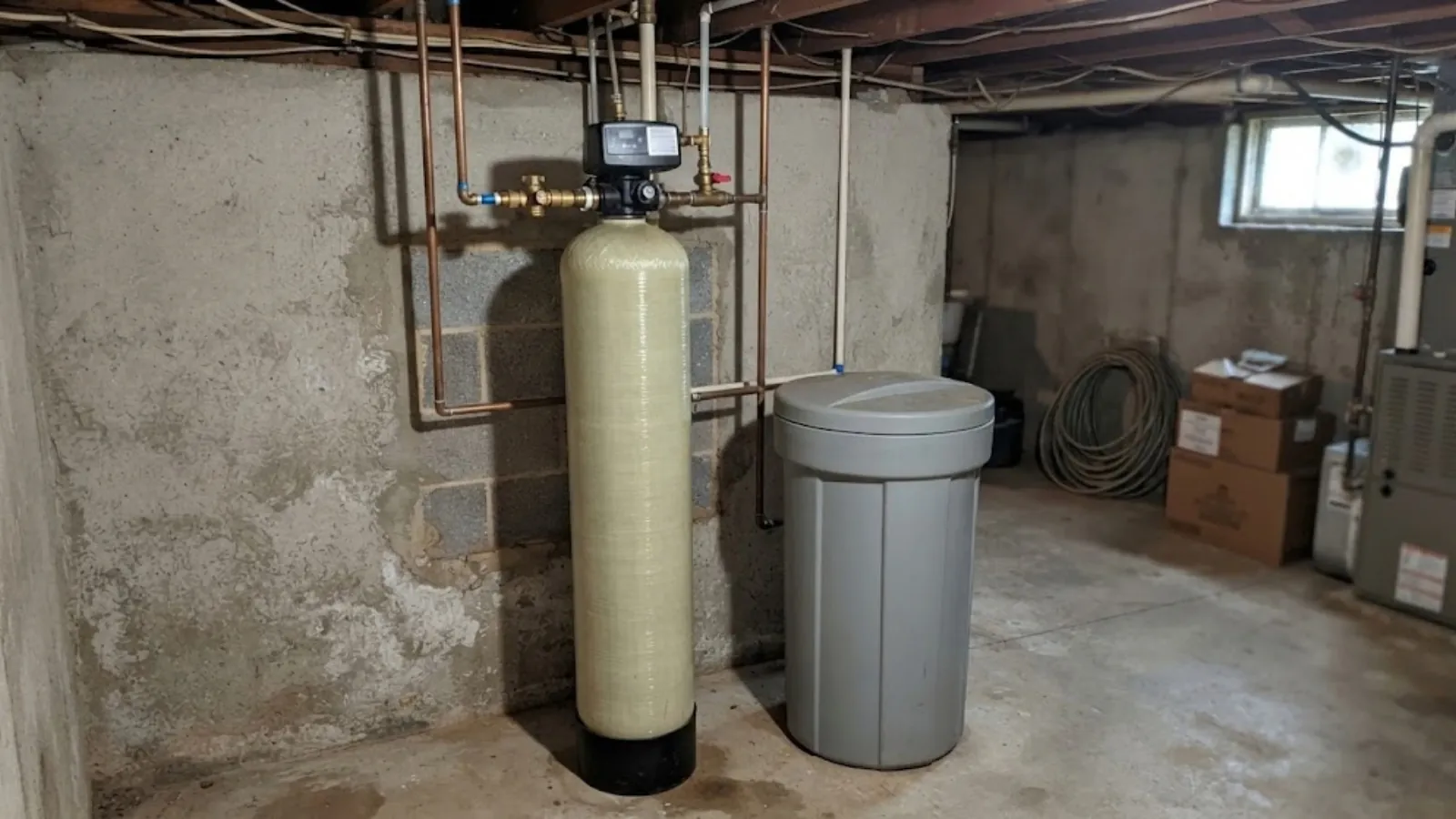
It depends on where your water comes from. The City of Hamilton lime-treats its water at its North and South plants, which lowers hardness to a moderate level, so many city homes do not need a softener. Homes on private wells in the surrounding townships get untreated aquifer water that is usually much harder, and there a softener often pays for itself.
Here is how to know which camp you are in, what to test, and how to size a softener if you need one.
What Hamilton does to its water
Hamilton draws its water from wells about 210 feet deep in the Great Miami Buried Valley Aquifer. According to the city's water quality report, the raw water goes through aerators, then solids-contact clarifiers where lime is added, then recarbonation to adjust pH, then filtration, before disinfection with chlorine dioxide.
Lime treatment removes a large share of the calcium that makes water hard. Reporting on regional water has put Hamilton's hardness after treatment at roughly 140 mg/L, which works out to about 8 grains per gallon. That is moderately hard. It leaves some spotting and scale, but far less than untreated groundwater.
How nearby water compares
| Water source | Approximate hardness | Softener usually needed? |
|---|---|---|
| Hamilton city water (treated) | About 140 mg/L, roughly 8 gpg | Optional, a matter of preference. |
| Fairfield city water (softened) | About 128 mg/L, 7.2 gpg | Optional. |
| Oxford city water (not yet softened) | About 350 to 380 mg/L | Often yes, until the new plant runs. |
| Private wells in the townships | Varies, usually well above treated city water | Often yes, plus iron treatment. |
Numbers vary over time and by address, so a test at your own tap settles it.
How to tell if your home would benefit
- White crust on faucets and shower heads that returns within weeks.
- Spots on dishes even with a rinse aid.
- A water heater that rumbles or needs frequent flushing.
- Soap and shampoo that lather poorly.
- Orange staining, which points to iron, common in well water.
If you see only mild spotting on Hamilton city water, cleaning habits and a rinse aid may be all you need. Heavy crust and a noisy water heater point to harder water, usually a well.
Sizing a softener if you need one
A softener is sized by how many grains of hardness it must remove per day, which is hardness in grains per gallon times the gallons your household uses. A family of four using around 300 gallons a day on 20 gpg well water needs about 6,000 grains of removal daily, so a unit rated at 32,000 grains would regenerate roughly every four to five days.
Iron in well water reduces a softener's capacity and can foul its resin, so iron often calls for a separate filter ahead of the softener. The Ohio Plumbing Code, based on the 2021 International Plumbing Code (IPC), requires the regeneration drain to discharge through an air gap or air break. Setup details and the usual failures are on the softener installs and repairs page.
Where softening matters most: water heaters
Scale does the most damage inside water heaters, and the most of all inside tankless heat exchangers, whose narrow passages clog quickly on hard water. On well water, a softener in front of a tankless unit is close to essential. On Hamilton city water, a yearly flush is usually enough, as the descaling guide for on-demand heaters explains.
Well owners around Hamilton
Owners in Ross Township and other rural areas around Hamilton are the ones most likely to benefit. Private wells are not tested by any utility, so a periodic test for hardness, iron and bacteria is the owner's job.
Before you call about a softener
- Find out whether you are on city water or a private well.
- Check your water supplier's latest water quality report for hardness.
- On a well, have the water tested for hardness, iron and bacteria.
- Note how many people live in the house and how many bathrooms you have.
- Decide whether you want the kitchen cold tap left unsoftened.
With those answers, a softener can be sized in one conversation, or you may find you do not need one at all.
The real costs of running a softener
Owning a softener means paying once to install it and a little every month after. It uses salt, typically a bag or two a month depending on hardness and usage, and it uses water and a little electricity each time it regenerates. Resin lasts many years on city water but can foul sooner on well water with iron.
On Hamilton city water, where the plant has already reduced hardness, the savings from protecting fixtures and water heaters may be modest. On hard well water, the savings on water heater life, detergent and fixture replacement are usually much larger. That difference is why the same product can be a good buy for one household and an unnecessary one for the family across town.
If you rent or plan to move soon, a portable or point-of-use approach, such as a scale-reducing cartridge for a tankless heater, may make more sense than a whole-house unit.
Other signs that look like hard water but are not
Not every spot or stain is hardness. Blue-green stains around drains usually point to copper corrosion from low pH water, more common on some wells. Black specks can be manganese or bits of a failing rubber part. Cloudy water that clears from the bottom of the glass up is just air.
Orange and brown staining is iron, which a standard softener handles poorly at higher levels. A water test that includes pH, iron and manganese, not just hardness, keeps you from buying equipment that solves the wrong problem. For drinking water concerns such as lead, a certified filter, not a softener, is the right tool.
A quick at-home check
Hardness test strips from a hardware or pool store give a rough reading in a minute. Dip one in cold water from the kitchen tap and compare the color to the chart. It will not replace a lab test on a well, but it tells a city customer whether the water is in the moderate range the city reports or unusually hard for some other reason.
Frequently asked questions
After lime treatment, reported at roughly 140 mg/L, or about 8 grains per gallon.
No. Softeners remove hardness minerals. Lead reduction needs a filter certified to NSF/ANSI Standard 53.
Slightly, at higher hardness levels. Many owners leave the kitchen cold tap unsoftened.
Depends on usage and hardness. Keep the brine tank at least a third full.
Not when correctly installed and set. An oversized unit set to regenerate too often wastes salt and water but does not harm pipes.
Usually not. Lawn and garden water is often left on hard water to save salt, using a bypass loop.