Floor Drain Backing Up in a Storm: Sewer Backup or Groundwater?
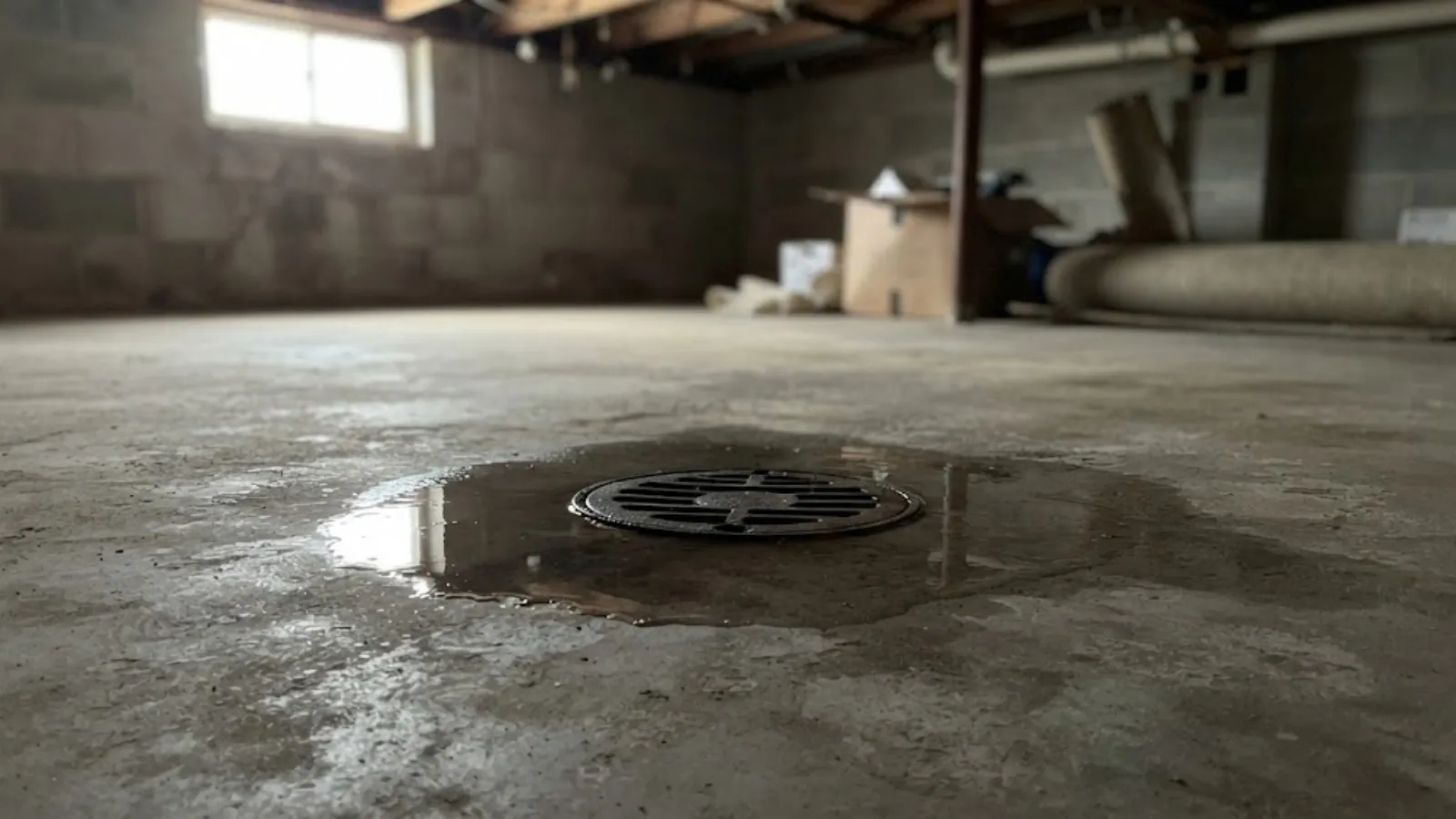
If water comes up through your basement floor drain during heavy rain, check two things: the color and smell of the water, and whether it happens only when it rains. Gray, smelly water is sewage, which points to a blocked or damaged sewer lateral or an overloaded public sewer. Clear water seeping in at the edges of the floor is usually groundwater, which points to drainage and the sump system.
The fix is completely different for each, so it pays to know which you have before calling anyone.
Two very different problems
| Clue | Sewer backup | Groundwater |
|---|---|---|
| Water appearance | Gray, murky, may contain debris | Clear or slightly cloudy. |
| Smell | Sewage odor | Earthy or none. |
| Where it enters | Up through the floor drain | At the wall joint, cracks or the sump pit. |
| Other drains | Toilets and tubs may gurgle or back up | Other drains work normally. |
| Timing | During heavy rain, sometimes dry weather too | During and after rain, spring especially. |
If it is sewage
Sewage in the floor drain means water cannot get out of the house through the sewer. Either your lateral is blocked or damaged, or the public sewer is overloaded and pushing back. If several neighbors back up at once, especially during a storm, tell the city, since the public main may be the cause.
If it is only your house, the problem is almost always your own line. In Hamilton, city code section 931.031 makes the owner responsible for the whole lateral to the public sewer. Clearing the line and inspecting it with a camera is the first step, covered on our drain cleaning page.
- Stop using water in the house immediately.
- Keep children and pets away from the water, which is contaminated.
- Photograph the water and affected items for insurance.
- Do not pour chemicals into the drain.
If it is groundwater
Hamilton sits over the Great Miami Buried Valley Aquifer, which the river recharges during high-flow months, generally November through April. Groundwater rises during those months and after heavy rain, pressing on basement walls and floors.
Clear water at the wall joint or around the edges of the floor usually means the drain tile and sump system are overwhelmed or missing. A sump pump that has failed, or one that cannot keep up, is the most common culprit. Our sump pump repair page covers diagnosis and backups.
When the two problems connect
Sometimes they overlap. A sump pump that discharges into a floor drain or laundry tub sends groundwater into the sanitary sewer during storms, adding to the load that causes backups for everyone. Ohio EPA notes that downspouts, foundation drains and sump pumps tied into the sanitary sewer contribute to basement backups.
The Ohio Plumbing Code, based on the 2021 International Plumbing Code (IPC), does not allow storm water to drain into a sewer intended only for sewage. Redirecting a sump discharge outside protects both your basement and your neighbors'.
Preventing the next storm backup
- Have the lateral cleared and camera-inspected if sewage has come up before.
- Consider a backwater valve on the main drain if backups are recurring.
- Test the sump pump before spring and add a battery backup.
- Make sure downspouts and the sump discharge water well away from the foundation.
- Check that your insurance includes sewer backup coverage.
Outside the city
Homes that converted from septic to public sewer, such as in parts of Ross Township, sometimes still have older drain lines from the septic era that are more prone to blockage.
What to do after sewage has come up
- Keep people and pets out of the area and wear gloves and boots if you must enter.
- Photograph and video the water and damaged items before removing anything.
- Discard porous items soaked by sewage, such as carpet pad and cardboard boxes.
- Do not run fans that blow contaminated air into the rest of the house.
- Call your insurer to report the loss and ask about sewer backup coverage.
Cleanup of sewage-soaked materials is a restoration job, separate from clearing the drain. Drying and disinfection should start promptly, since wet materials can begin to grow mold within 24 to 48 hours.
Telling the difference in dry weather
Some homes back up in dry weather too. When that happens, rain is not the cause at all, and the problem is almost certainly a blockage in the house drain or lateral. Tree roots, grease and wipes are the usual culprits.
A simple test helps. If the floor drain only fills when the washing machine drains or a toilet flushes, the main line is partly blocked and water cannot get out fast enough. That calls for clearing and a camera look before the next heavy storm makes it worse.
If water only appears after rain and it is clear, the drain is likely fine and the focus should be on grading, downspouts and the sump system.
Protecting a finished basement
Finished basements turn both kinds of water into expensive damage. A few measures cut the risk: a working sump pump with a battery backup, a water alarm near the floor drain and the water heater, storage on shelves rather than the floor, and a backwater valve if backups have come from the sewer before.
It is also worth knowing what flooring you have. Carpet and pad soaked by sewage have to go. Vinyl plank or sealed concrete can often be cleaned and kept. When finishing or refinishing a basement in a house with a backup history, choosing flooring that survives water is a quiet way to limit future losses.
Keep the floor drain trap full
A floor drain that rarely sees water can dry out, letting sewer gas into the basement. That smell is sometimes mistaken for a backup. Pouring a bucket of water into the drain every month or two keeps the trap sealed, and it is a quick way to confirm the drain still flows freely before the rainy season.
Frequently asked questions
No. Clear water is often groundwater. Gray, smelly water is sewage.
Usually only with a sewer backup endorsement. Standard policies often exclude it.
Not permanently. A backwater valve or a properly installed floor drain plug designed for backflow is safer than blocking the drain.
Promptly. It is contaminated, and porous materials it soaked are usually removed.
If several neighbors are backing up, tell the city. If it is only your house, call a plumber, since the problem is usually your own lateral.
A sump discharging into a floor drain or laundry tub adds storm water to the sanitary sewer, which can contribute to backups.