Galvanized Supply Lines in Rossville Homes: Signs It Is Time to Repipe
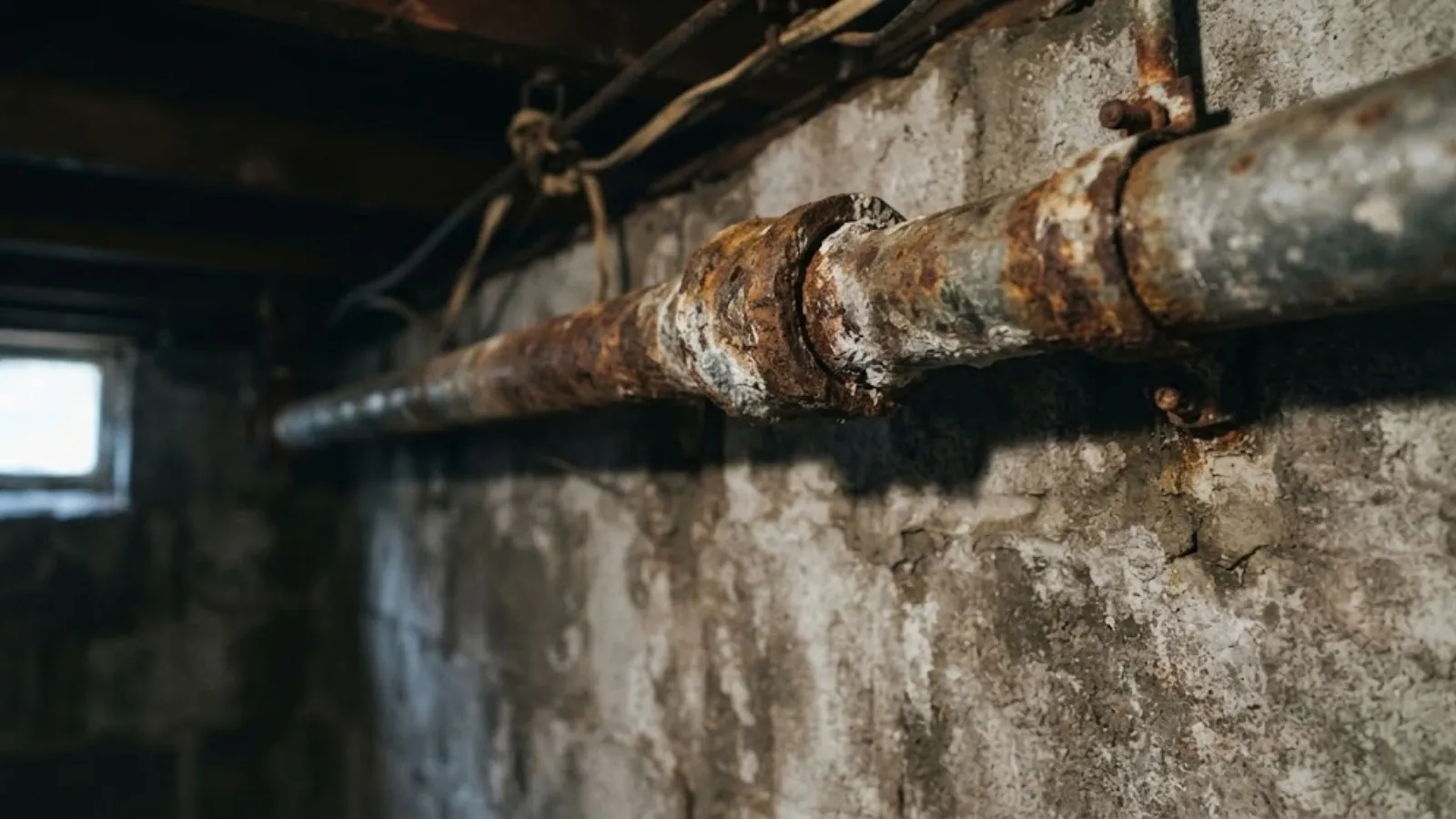
If your older Rossville or West Side home has brown water when a tap first opens, pressure that has faded over the years, or leaks at threaded joints, the likely cause is galvanized steel supply pipe. It rusts from the inside, narrowing until little water gets through, and it leaks where the threads were cut.
Patching one section rarely helps for long. Here are the signs, why they happen, and when a full repipe makes sense.
Why Rossville homes still have galvanized pipe
Rossville, the neighborhood on the west side of the High-Main Bridge, began as its own town before joining Hamilton, and many of its homes and storefronts are more than a century old. What matters for plumbing is that most were plumbed or re-plumbed with galvanized steel, the standard supply pipe for much of the last century.
Many of those systems have never been fully replaced. That is why low pressure, rusty water and threaded-joint leaks are such common calls on the West Side, and why a repipe is often the most cost-effective repair over the next ten years.
How galvanized pipe fails
Galvanized pipe is steel with a zinc coating. Over decades, the zinc wears away and the steel rusts from the inside, building up a rough crust that narrows the pipe. A three-quarter-inch line can end up with an opening a fraction of that size.
The threaded joints are the weak points, because cutting threads removed part of the pipe wall and the protective coating. Leaks tend to appear there first.
- Brown or rusty water when a faucet first opens.
- Low pressure, worst at upstairs fixtures and when two taps run at once.
- Pressure that dropped gradually over years rather than suddenly.
- Leaks or crust at threaded joints in the basement.
- Gray threaded pipe visible in the basement ceiling.
The lead connection
Galvanized pipe can collect lead particles if it sat downstream of a lead service line, then release them later. That is why federal rules now treat galvanized service lines that were downstream of lead as needing replacement.
If your service line is lead and your interior pipes are galvanized, replacing both together removes the problem end to end and means one water outage instead of two. Our water line replacement page covers the buried line from the curb stop.
Patch or repipe?
| Situation | Better choice |
|---|---|
| One leak, rest of the house already copper or PEX | Replace the galvanized section. |
| Galvanized throughout, pressure fading | Full repipe. |
| Repeated leaks in the last few years | Full repipe. |
| Planning a kitchen or bath remodel | Repipe at the same time while walls are open. |
Our repiping page covers the choice between PEX and copper and how the work is done while you live in the house. In plaster-walled older homes, PEX usually means fewer and smaller wall openings.
What a repipe involves
New lines are run from the main shutoff to each fixture, favoring basement ceilings, closets and existing chases. Fixtures are switched over a section at a time, so water outages are short. The finished system is pressure-tested and inspected under a city permit. The Ohio Plumbing Code, based on the 2021 International Plumbing Code (IPC), requires approved transition fittings wherever new pipe connects to any remaining old metal, which prevents new corrosion at the joint.
Other older neighborhoods
Galvanized pipe is common wherever homes date from before the 1960s. The older village core of Trenton, north along the river, has many of the same symptoms.
What to do if you find a leak on galvanized pipe
- Close the nearest fixture valve, or the main shutoff if there is none.
- Do not overtighten a leaking threaded joint, which can crack the old pipe.
- Put a bucket under the leak and photograph it.
- Have the failed section replaced and ask how much of the rest is in similar condition.
A clamp can stop a pinhole temporarily, but on galvanized pipe it rarely lasts, because the pipe around it is equally thin.
Test your pressure before and after
A screw-on pressure gauge at an outdoor spigot shows static pressure coming into the house. Then open the highest faucet in the house fully and watch how the flow compares with the basement laundry tub. In a house with narrowed galvanized pipe, static pressure can look normal while flow at upstairs fixtures is weak, because the restriction is inside the pipe, not in the supply.
After a repipe, owners usually notice the difference immediately: stronger showers upstairs, faster-filling tubs and no rusty water in the morning. Writing down the before and after numbers is a simple way to confirm the work made the difference it should.
Planning a repipe around your life
A repipe does not have to happen all at once. Many owners of older homes start with the worst sections, usually the lines feeding upstairs bathrooms, and finish the rest the following year, or they schedule the full job for a time when the house is less busy.
Doing it before a kitchen or bathroom remodel is the most efficient approach, because the walls are open anyway. Doing it after means reopening finished walls. If a remodel is on your list within the next couple of years, plan the repipe to come first.
Ask for a written plan that shows which fixtures each new line will serve and where access holes will be cut, so there are no surprises in finished rooms.
Check the main shutoff while you are at it
Old gate valves on galvanized mains often seize or fail to close fully. Before any repipe, and ideally before any emergency, test that the main shutoff turns and actually stops the water. Replacing it with a quarter-turn ball valve is usually part of a repipe, and it can be done on its own as a small job if the rest of the work has to wait.
Frequently asked questions
Often 40 to 60 years before significant corrosion. Many older Hamilton homes are well past that.
Not effectively. The buildup is part of the corroded pipe wall.
Rust itself is mostly an aesthetic problem, but galvanized pipe downstream of lead can carry lead particles. Test if you are unsure.
Yes, pulled under a city Master Registration and inspected.
You can, but hidden sections inside walls are the same age. Partial replacement often moves the problem rather than solving it.
It removes a known defect that buyers' inspectors flag, which helps at sale time, especially in older neighborhoods.