The Orphaned Water Heater Flue After a Furnace Upgrade
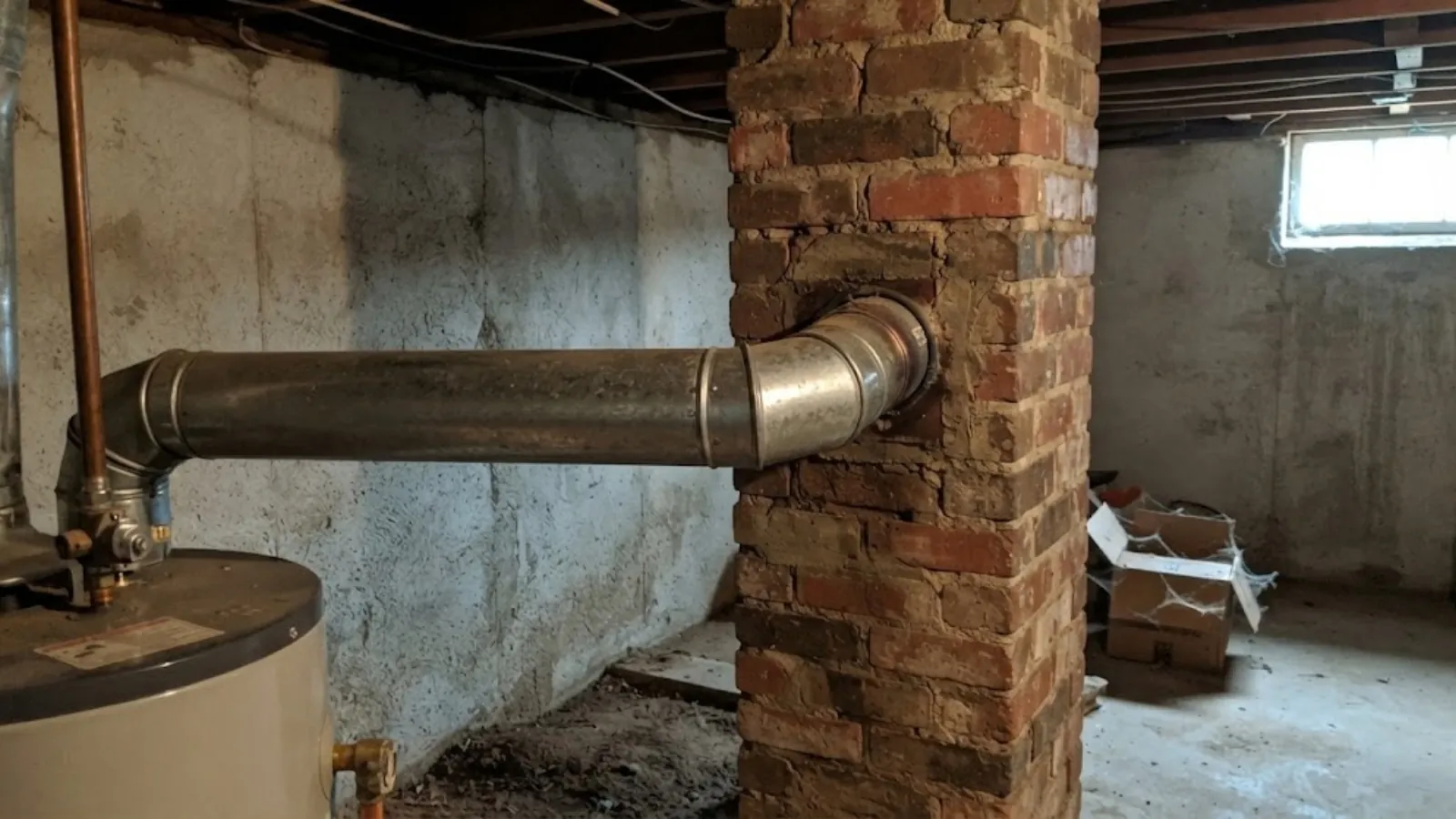
Picture an older furnace and a gas water heater sharing one masonry chimney. Swap the furnace for a high-efficiency model that vents through a side wall, and the water heater now vents alone into a chimney sized for two. That lone water heater is called orphaned, and the chimney may now be too large and too cold for it to draft properly.
Poor draft can push exhaust, including carbon monoxide, back into the basement. Here is how to tell whether your home has the problem and how it is usually fixed.
Why the chimney stops working
A chimney drafts because hot exhaust is lighter than outdoor air and rises. When the furnace and water heater shared it, their combined heat kept the flue warm and the draft strong. A water heater alone produces much less heat, and in a large masonry flue, especially one on an outside wall, the exhaust cools before it reaches the top.
Cooled exhaust draws poorly, may condense water inside the chimney, and can spill back into the room at the water heater's draft hood. Condensation also damages old masonry and mortar over time.
Warning signs
- Rust or water stains on the draft hood or the top of the water heater.
- Soot or scorch marks around the draft hood.
- A flame that flickers or rolls out when doors close or a bathroom fan runs.
- Crumbling mortar or water staining on the chimney inside the basement.
- A carbon monoxide alarm going off.
If a CO alarm sounds, leave the house and call 911 or the gas utility from outside. Do not wait to investigate.
A simple draft check
With the water heater running for a few minutes, hold a lit match or incense stick near the edge of the draft hood. The hood should draw the smoke in. If smoke drifts into the room, the heater is spilling exhaust. Have it checked before running it much more.
This is a quick screen, not a full test. A professional check measures draft and looks at the whole venting path.
How it is fixed
| Fix | How it works | Best fit |
|---|---|---|
| Chimney liner | A properly sized metal liner inside the chimney for the water heater alone | Most orphaned water heaters in sound chimneys. |
| Power-vent water heater | A fan pushes exhaust out through a side wall | When the chimney is unusable or a liner is impractical. |
| Direct-vent water heater | Sealed combustion vented through the wall | Where a wall vent location works. |
| Heat pump water heater | No combustion and no flue | Homes ready to switch to electric. |
Gas venting follows the manufacturer's instructions and the Ohio Mechanical Code. The water heater itself, including its relief valve and connections, falls under the Ohio Plumbing Code, which is based on the 2021 International Plumbing Code (IPC). Either way, it is permitted work.
Why it matters in older Hamilton area homes
Masonry chimneys are standard in older houses throughout Hamilton's historic neighborhoods and in older homes around the area, including near campus in Oxford. As furnaces get upgraded to high-efficiency models, orphaned water heaters become common, and the venting is easy to overlook because the water heater itself was not touched.
If you are replacing the water heater anyway, the venting choice is part of that decision. Our water heater replacement page covers the options, and if moving to a different appliance requires new gas piping, our gas line installation page explains that work.
Keep a CO alarm near fuel-burning appliances
Any home with a gas water heater, furnace or other fuel-burning appliance should have working carbon monoxide alarms, including near sleeping areas. Test them monthly and replace them according to the manufacturer's date. An alarm is the backup that matters most when venting fails.
What to do if you suspect backdrafting
- Make sure a working carbon monoxide alarm is installed near the water heater and bedrooms.
- Do not block or tape the draft hood.
- Avoid running bathroom and kitchen exhaust fans at full speed in a tight house until it is checked.
- Schedule a venting inspection before relying on the heater for long periods.
If anyone in the house feels dizzy, nauseated or has a headache that improves when away from home, treat it as a possible CO problem and leave until it is checked.
Questions to ask when your furnace is replaced
If you are replacing a furnace now, ask before the work begins: will the water heater still vent into the chimney, and if so, will the chimney be lined or resized for the water heater alone? A good installer checks this as part of the job. Still, it is easy to miss when nobody is touching the water heater.
If a liner is needed, doing it at the same time as the furnace swap avoids a second visit. If the water heater is near the end of its life, it may make more sense to replace it with a power-vent or heat pump unit at the same time and retire the chimney from appliance use altogether.
Why this problem is growing
High-efficiency furnaces have become the standard replacement, and each one that replaces an older furnace in a shared chimney can leave a water heater behind. Many homeowners never learn about the change, because the water heater keeps working. The problem only shows up as rust at the draft hood, deteriorating mortar, or a CO alarm.
The cheapest time to handle it is at the moment the furnace changes. The second cheapest is at the next water heater replacement. The most expensive is after years of condensation have damaged the chimney.
Keep the area around the water heater clear
Gas water heaters need combustion air. Boxes, laundry and stored items crowded around the base can starve the burner and make draft problems worse. Keep the area around the heater open, and never store paint, gasoline or solvents in the same room, since their vapors can be drawn into the flame.
Frequently asked questions
A gas water heater left venting alone into a chimney it used to share with a furnace.
It can be, if poor draft lets exhaust spill into the house. A CO alarm and a venting check are worth having.
It varies with chimney height and access. It is usually less than replacing the water heater with a power-vent model.
Not necessarily. But anyone removing a furnace from a shared chimney should check the water heater's venting.
Not while any appliance still vents into it. Once every appliance vents directly through the wall, you can retire the chimney properly.
No. Electric and heat pump water heaters have no flue.