Sump Pump and Battery Backup Sizing for Great Miami River Basements
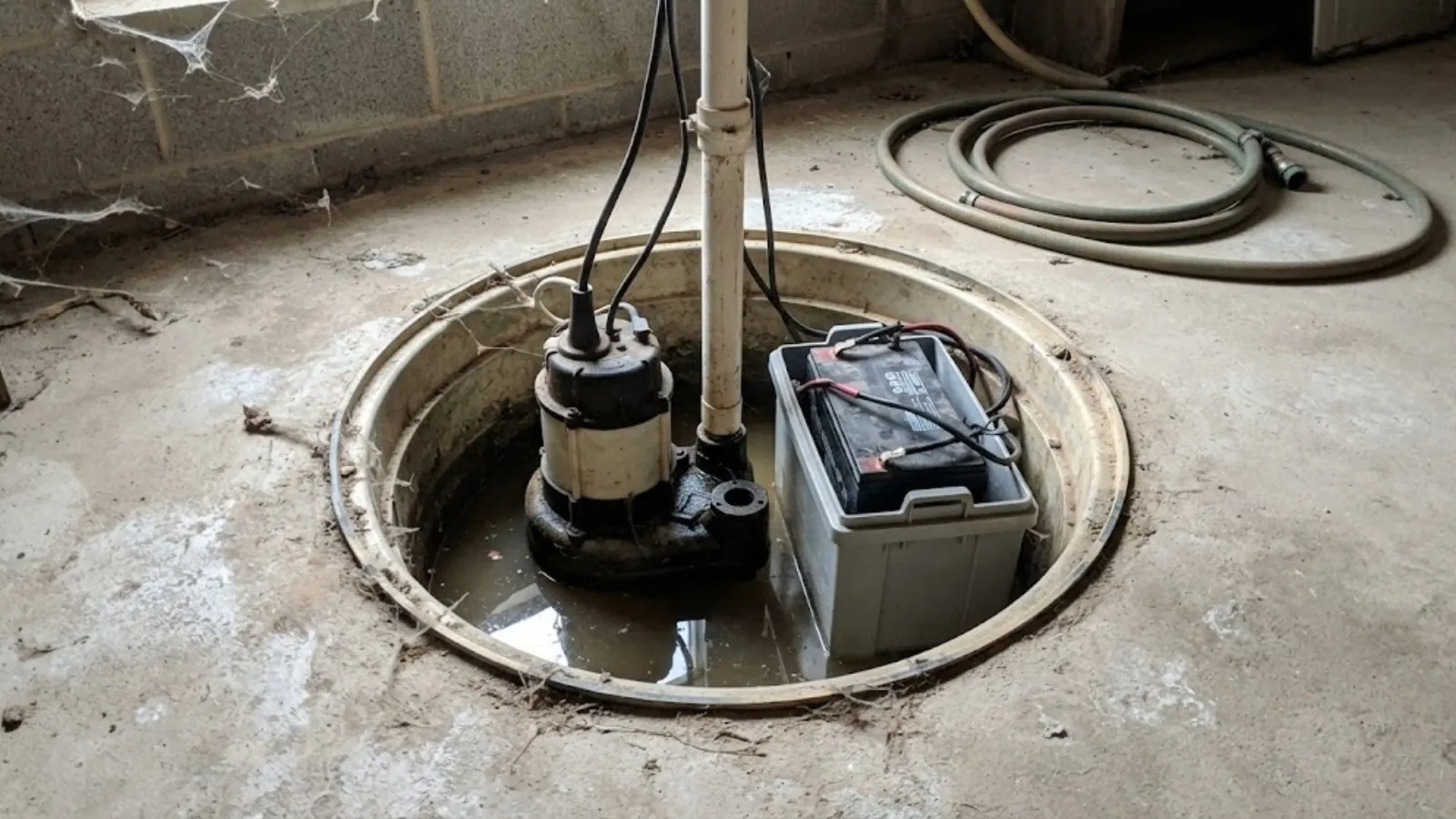
A sump pump should be sized to how fast water actually enters your pit and how high it has to lift that water to get it outside. For most Hamilton basements, that means a 1/3 or 1/2 horsepower primary pump, matched to a battery backup that can run through a multi-hour power outage.
Here is how to measure your real inflow, read a pump chart, and choose a backup that will still be running when you need it.
Why sizing matters more here
Hamilton sits on the Great Miami River and above the Great Miami Buried Valley Aquifer. The river recharges that aquifer during high-flow months, generally November through April, which is when groundwater presses hardest against basement walls. Some basements take in a trickle, others fill a pit in minutes during a wet spring.
A pump that is too small cannot keep up in those weeks. One that is too large for a small pit short-cycles, switching on and off every minute, which wears out the motor and switch early.
Measure your inflow
- Wait for a wet period, when the pump is running regularly.
- Unplug the pump briefly and time how long the water takes to rise a set distance, such as 2 inches.
- Measure the pit diameter. A common 18-inch pit holds about 1.1 gallons per inch of depth.
- Multiply inches of rise by gallons per inch, then convert to gallons per minute.
- Plug the pump back in right away.
That gallons-per-minute figure is your working inflow. Size the pump to handle comfortably more than your worst observed rate.
Read the pump chart, not just the horsepower
Horsepower alone says little. Every pump has a performance chart showing gallons per hour at different vertical lifts, called head. A basement pump typically lifts water 8 to 12 feet to get it over the foundation and outside, plus some loss from pipe length and fittings.
Find your lift on the chart and check the flow at that height. That number, not the flow at zero feet, is what the pump will actually move.
| Pump | Typical fit | Watch for |
|---|---|---|
| A 1/3 hp submersible. | Most basements with low to moderate inflow. | May fall behind in heavy spring inflow. |
| A 1/2 hp submersible. | Higher inflow or a taller lift. | Can short-cycle in a small pit. |
| A 3/4 hp or dual pump. | Basements that fill quickly. | Needs a larger pit and a check on the discharge size. |
Choosing a backup that actually works
The storm that fills the pit is the same storm that knocks out power. A battery backup pump sits in the same pit, slightly higher than the primary, and runs when the primary fails or loses power. Its run time depends on the battery size and how often it has to cycle, so the inflow measurement matters here too.
A water-powered backup uses city water pressure to pump the pit, with no battery to fail. It uses a meaningful amount of city water while running and needs backflow protection on its supply. Homes on private wells cannot use one, since the well pump also stops when the power does.
Discharge: the other half of the system
A perfectly sized pump still fails if its discharge is wrong. The line should end outside, well away from the foundation, so the water does not soak straight back into the drain tile. The Ohio Plumbing Code, based on the 2021 International Plumbing Code (IPC), does not allow storm water to drain into a sewer intended for sewage only, so a sump should not be tied into a floor drain or laundry tub.
In winter, a discharge line that freezes can burn out the pump. A short air-gap fitting near the house lets water escape if the buried section freezes. Pump and backup setups are covered on the sump pump page, and if water keeps showing up in the floor drain rather than the pit, the issue may be the drain, which drain cleaning addresses.
Finished basements need more margin
A finished basement turns a sump failure from a mop-up into drywall, carpet and furniture. Newer homes in Liberty Township often have large finished lower levels on perimeter drain tile, where a backup pump and a water alarm are cheap compared with the loss they prevent.
Signs your current pump is undersized
- The pump runs continuously during heavy rain and the water level still rises.
- Water appears at the wall joint while the pump is running.
- The pit nearly fills between cycles on a wet day.
- The motor feels very hot or the pump has failed within a few years.
Any of these means the pump, the pit or the drain tile is being asked to do more than it can. A larger pump helps only if the pit and discharge pipe can handle the extra flow.
The discharge pipe size matters too
Most residential sump pumps discharge through 1.5-inch pipe, and some larger pumps are designed for 2-inch. Reducing a pump's outlet to a smaller pipe to match existing plumbing cuts its real output. When upgrading to a higher-capacity pump, check that the discharge pipe, check valve and outlet all match what the manufacturer calls for.
Every elbow and every foot of horizontal run adds resistance. A discharge line that climbs straight up the wall, exits through the rim joist and then runs downhill away from the house performs better than one with several bends. The outlet should also be protected from freezing, and it should not sit where the water will simply flow back toward the foundation.
A good installation includes a union or rubber coupling above the check valve, so the next pump replacement takes minutes rather than cutting pipe.
Before you buy a new pump
Check the easy failures first. A float tangled in the power cord, a tripped GFCI outlet or a clogged intake screen can make a good pump look dead. Unplugging and replugging the pump, clearing the pit of gravel and lifting the float by hand takes minutes and sometimes solves the problem outright.
Frequently asked questions
Many do well with a 1/3 or 1/2 horsepower submersible, but measured inflow and lift should decide it.
It depends on battery size and how often the pump cycles. Heavy inflow drains a battery much faster.
No. It needs city water pressure, and a well pump stops when the power goes out.
Every few months, and before each spring, by filling the pit with water.