Tank vs. Tankless in a Hamilton Basement: Gas, Venting and Flush Intervals
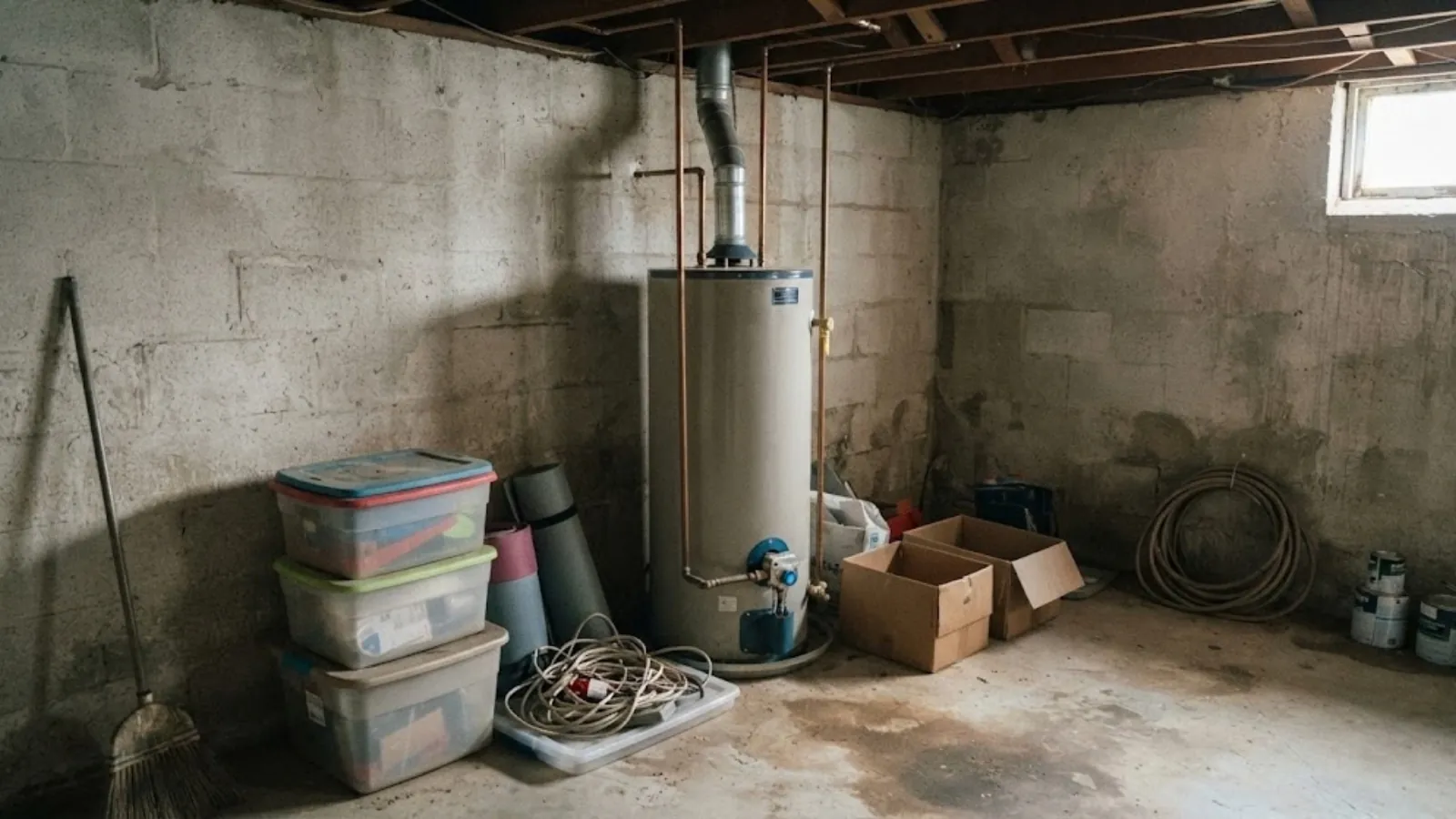
For most Hamilton homes with a basement and an existing gas tank, a new tank water heater is the simpler and less expensive replacement. Tankless makes sense for homes where the hot water gives out most mornings, where the floor space is wanted back, or plan to stay long enough to recover the higher installation cost.
The deciding details are practical: the size of your gas line, how the unit will vent, your water hardness, and how much hot water you use at once.
How the two differ
| Tank | Tankless | |
|---|---|---|
| How it heats | Keeps 40 to 50 gallons hot all the time | Heats water only as it flows. |
| Runs out of hot water? | Yes, when the tank is used up | No, but flow rate limits how many taps at once. |
| Gas line | Usually works with the existing line | Often needs a larger gas line. |
| Venting | Often uses the existing chimney | Needs its own direct or power vent. |
| Upfront cost | Lower | Higher, due to unit and installation. |
| Maintenance | Flush about yearly | Descale about yearly, more on hard water. |
The gas line question
A tankless heater fires a large burner the moment hot water is called for, and it needs enough gas volume to do that while the furnace and other appliances run. Many older gas lines were sized for a tank heater and cannot supply it. Upsizing the line from the meter is common and adds to the cost.
Most Hamilton homes are supplied by the city's own natural gas utility, which the city has run since 1890. The piping after the meter is the owner's, and new or upsized gas piping is permitted and pressure-tested. That piping work is permitted and pressure-tested before the new heater is connected.
Venting in an older house
A tank heater can often keep using the existing chimney. A tankless unit cannot vent into an old masonry chimney. It needs its own vent, usually through the side wall, which means finding a suitable spot and running the vent there.
If your furnace has already been moved to a side-wall vent, your existing tank may be orphaned in the chimney, which is worth checking regardless of which type you choose next.
Water hardness and upkeep
Tankless heat exchangers have narrow passages that collect scale quickly. Hamilton's city water is lime-treated, which lowers hardness, so a yearly descale is usually enough. On untreated well water, a softener ahead of the unit and more frequent descaling are close to essential.
The Ohio Plumbing Code, based on the 2021 International Plumbing Code (IPC), applies to both types for water connections and relief protection. See how on-demand heaters get descaled for the routine and common error codes.
Who each one suits
- Tank: households with steady, moderate use, an existing gas line and chimney, and a preference for lower upfront cost.
- Tank: homes where the existing heater simply wore out and nothing else needs to change.
- Tankless: families whose showers go cold halfway through, or who fill deep soaking tubs.
- Tankless: homes where floor space matters and the gas line and venting can be updated.
- Heat pump tank: roomy basements, especially where switching away from gas is the goal.
Replacement timing
The best time to make the switch is before the old tank fails, so the decision is not made in a flooded basement. Many newer homes in Liberty Township are reaching that point with their original tanks. If you already know the answer is another tank, our water heater replacement page covers sizing and installation.
What to do before choosing a replacement
- Check the age on your current heater's label.
- Count how many showers typically run back to back in the morning.
- Note whether you have run out of hot water in the past year.
- Look at where the current heater vents and whether the furnace shares that chimney.
- Find out whether you are on city water or a well.
Those answers usually settle the tank or tankless question quickly.
Sizing a tankless unit correctly
Tankless heaters are sized by flow rate at a given temperature rise, not gallons of storage. In winter, groundwater entering the house is colder, so the heater has to raise the temperature further, which lowers the flow it can deliver. A unit that easily runs two showers in summer may manage only one and a half in January.
Add up the fixtures likely to run at the same time, such as two showers and the kitchen sink, then check the heater's chart for flow at your winter temperature rise. Undersizing is the most common cause of disappointment with tankless in the Midwest, and it is avoidable with a few minutes of math before buying.
A heat pump water heater as the third option
Heat pump water heaters move heat from the surrounding air into the tank, using much less electricity than a standard electric tank. They suit roomy basements, since they need air volume and cool the space slightly while running, which many owners appreciate in summer.
They also need a condensate drain and a nearby outlet, and they recover more slowly than gas in heat-pump-only mode, though most have a backup electric element. For homes moving away from gas or replacing an old electric tank, they are worth pricing alongside tank and tankless.
They do not need a chimney at all, which also sidesteps the orphaned-flue problem that some older Hamilton basements have after a furnace upgrade.
Budgeting honestly
Compare quotes on the full installed cost, not the unit price. For a tank swap, that means the heater, connectors, venting check and permit. For tankless, add any gas line upsizing, new venting, service valves and possibly a condensate drain. The gap between the two is usually much wider installed than it looks on a store shelf, which is why the decision should rest on how you use hot water, not on the sticker.
Frequently asked questions
It usually uses less energy since it does not keep a tank hot, but savings are smaller for light users and take time to offset the higher upfront cost.
No. It needs its own direct or power vent, usually through a side wall.
Often, since tankless burners need more gas volume than a tank.
Tank heaters commonly last about eight to twelve years. Tankless units often last longer with regular descaling.
Many models support it, either built in or added, which shortens the wait for hot water at distant fixtures.
Gas piping, venting and permits make it a job for a registered contractor in Hamilton.