How Often to Flush a Water Heater on Hamilton City Water and Well Water
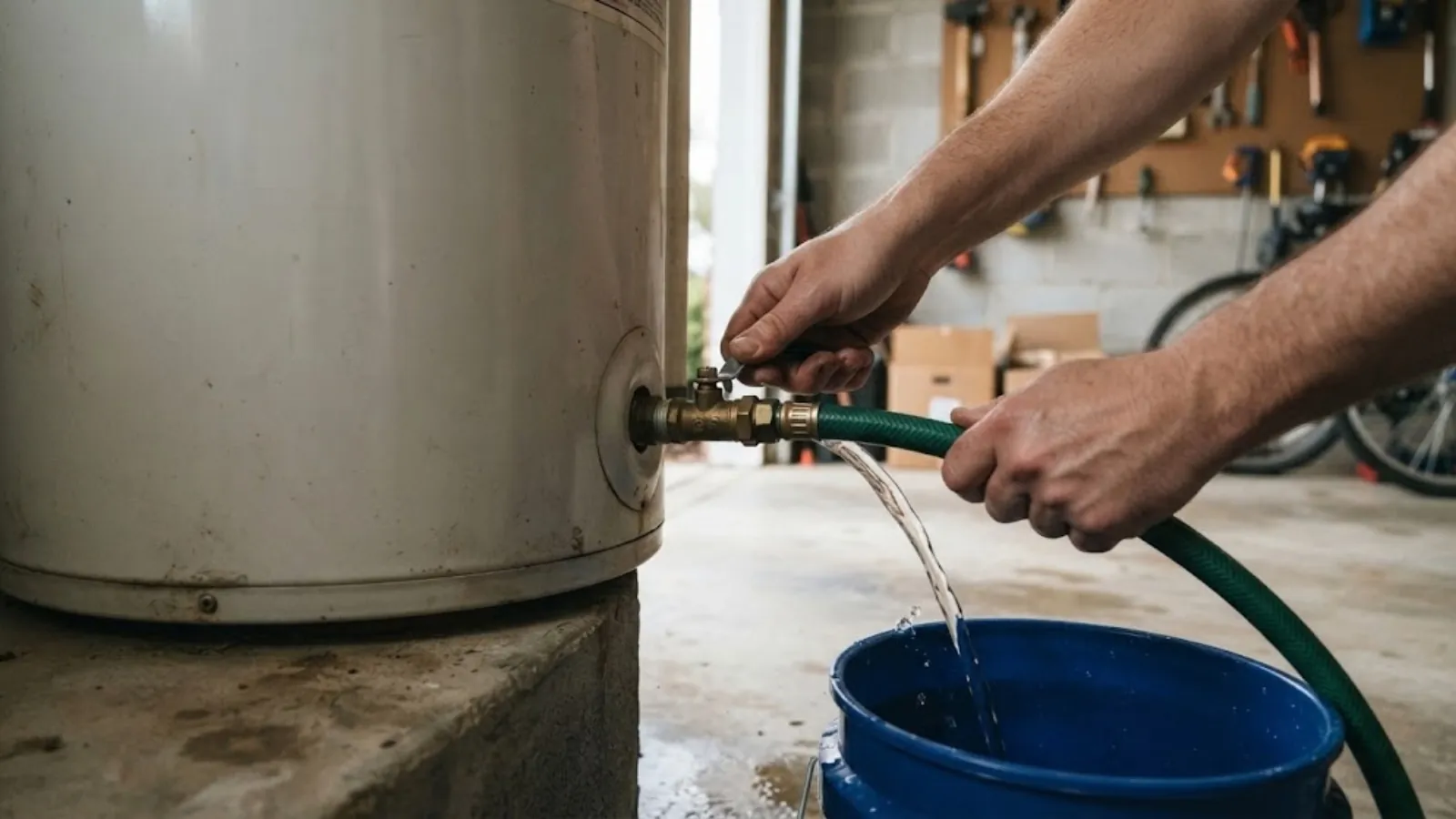
On Hamilton city water, flushing a tank water heater about once a year is a sensible schedule. On untreated well water in the surrounding townships, which is much harder, every six months is safer, and tankless heaters on well water may need descaling even more often.
Draining out the grit that collects at the bottom keeps a heater quieter, cheaper to run and alive longer. Below is the step-by-step, plus the point where it is smarter to hand the job off.
Why sediment builds up
Hardness minerals come out of solution when water is heated and settle as sediment. Hamilton lime-treats its water, which reduces the load, but some minerals remain. Well water carries far more.
As sediment builds, it insulates the water from the gas burner or buries the lower electric element. The heater runs longer, the tank makes popping noises as trapped water boils under the sediment, and the bottom of the tank runs hotter, which speeds up corrosion.
Suggested flush schedule
| Heater and water | Suggested interval | Notes |
|---|---|---|
| Tank, Hamilton city water | About once a year | Check manufacturer guidance. |
| Tank, private well | About every 6 months | More often if the heater rumbles. |
| Tankless, city water | About once a year descale | Many makers require it for warranty. |
| Tankless, private well | Every 6 to 12 months, often with a softener | Scale builds quickly in the heat exchanger. |
How to flush a tank heater safely
- Turn a gas heater's control to pilot, or switch off an electric heater's breaker.
- Close the cold water supply valve on top of the tank.
- Attach a garden hose to the drain valve and run it to a floor drain or outside.
- Open a hot water faucet upstairs to let air in.
- Open the drain valve and let water run until it comes out clear.
- Close the drain, open the cold supply, refill until the upstairs faucet runs steadily, then restore gas or power.
Water from the tank is hot enough to scald. Let the heater cool for a few hours first if you can. The Ohio Plumbing Code, based on the 2021 International Plumbing Code (IPC), requires a relief valve on every tank heater, and it is worth lifting its lever briefly during a flush to make sure it opens and reseats.
When flushing will not help
On a tank that has never been flushed in ten years, the sediment may have hardened and the drain valve may clog or refuse to reseat once opened. At that point, flushing can cause a leak without fixing much.
If the heater is old, rumbling and producing rusty water, flushing is unlikely to extend its life by much. Our water heater repair page explains when repair makes sense and when it does not.
Tankless heaters need a different routine
A tankless heater is descaled by circulating a cleaning solution through its heat exchanger using a small pump and the unit's service valves. Units installed without service valves need them added first. The inlet screen should also be cleaned.
Descaling steps and service-valve setup are laid out in our guide to on-demand heater service, along with the error codes that usually point to scale.
Newer neighborhoods and first-generation tanks
Many homes in Liberty Township are on their original or first replacement heater. Starting a flush schedule on a younger tank is the best way to get its full service life.
What to do if the drain valve will not close
- Close the cold water supply valve on top of the tank so no more water enters.
- Cap the drain valve outlet with a garden hose cap as a temporary seal.
- Leave the gas at pilot or the breaker off until the valve is fixed.
- Call for a replacement drain valve, which is a quick repair.
Plastic drain valves on some tanks are more likely to stick or crack once opened after years unused. A brass replacement valve is sturdier for regular flushing.
The anode rod: the other part worth checking
Inside every steel tank is an anode rod, a metal rod that corrodes on purpose so the tank does not. Once the anode is used up, the tank itself starts to rust. Checking and replacing the anode every few years can add real life to a tank, especially on harder water.
Anodes are usually magnesium or aluminum. A rotten egg smell in hot water only, a common complaint on some well water, often comes from a reaction at a magnesium anode and can be fixed by swapping to a different alloy.
Pairing an anode check with the annual flush is an easy routine. Our water heater repair page covers the anode and other parts that can be replaced before the tank itself fails.
Well water owners: add a sediment filter
On private wells, sand and grit can travel into the water heater along with dissolved minerals. A simple whole-house sediment filter ahead of the heater, changed on schedule, keeps that grit out of the tank and out of faucet cartridges. It does nothing for hardness, but it makes every flush cleaner and quicker.
If you notice sand in faucet aerators or a gritty feel at the bottom of the tub, check with a well professional too, since it can mean a problem with the well screen or pump placement.
Set a reminder you will actually see
The simplest way to keep a flush schedule is to write the date on the tank with a marker each time you do it, next to the manufacture date. Anyone who looks at the heater, including a future buyer's inspector, can see at a glance how well it has been kept. Pair it with testing the relief valve and checking the anode every few years, and the heater is likely to reach the upper end of its expected life.
Frequently asked questions
Yes, if you follow the steps carefully and the drain valve works. Hot water can scald, so let it cool first.
Sediment on the tank bottom. Flushing usually helps if the tank is not too old.
No. A leak from the tank body means it needs to be replaced.
Less than well water, since the city lime-treats it, but some minerals remain.
Yes. White or tan flakes are normal. Large amounts that never clear suggest the tank is heavily scaled.
Yes. Sediment can bury the lower element, causing it to burn out early.