Frozen Pipe Repair in Hamilton, OH
Frozen pipe repair in Hamilton, OH has two parts: thawing the pipe without damaging it, and finding any split before the ice melts and water starts running. A faucet that gives a trickle or nothing on a single-digit morning almost always means ice in a line near an outside wall.
Call (513) 796-9381 as soon as you notice it. The line is answered 24/7, and a pipe that has not split yet is far cheaper to deal with than one that has.
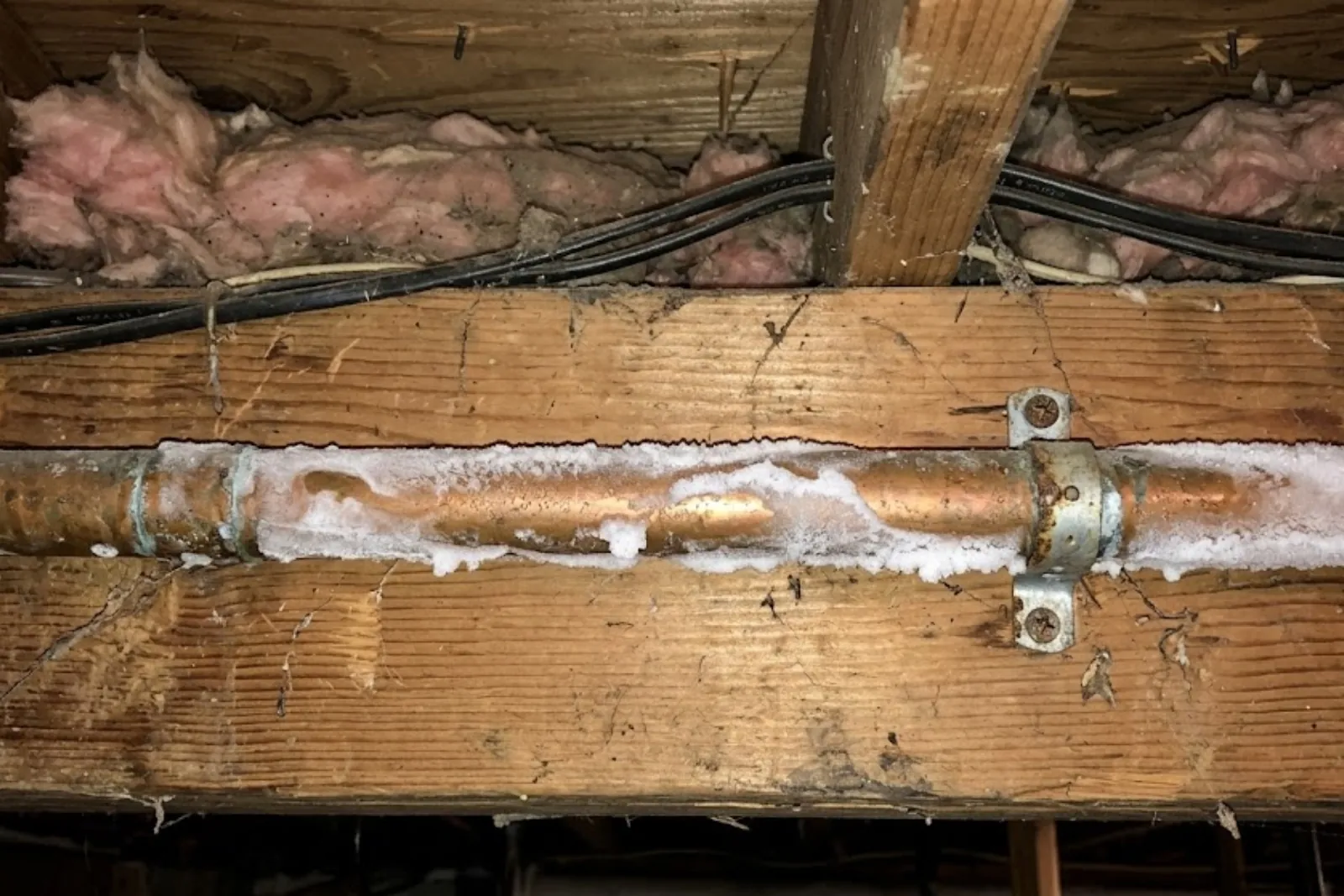
How cold does it get, and which pipes freeze first
Southwest Ohio winters are mostly mild, which is exactly why frozen pipes catch people off guard. The region's 30-year January average is about 31 degrees, but arctic outbreaks drop far below that. Cincinnati's all-time record low is 25 below zero, set on January 18, 1977, and January 19, 1994 came within one degree of it.
A pipe freezes when cold air actually reaches it, which can happen on a night that is only moderately cold outside.
The usual places in Hamilton homes are supply lines on exterior walls behind kitchen sinks, pipes in unheated additions and enclosed porches, lines running through garages, and hose bibs where a hose was left connected. Older houses in the historic districts often have plumbing added to back porches and kitchens long after the house was built, sometimes with little insulation.
Signs a pipe is frozen, or already split
- A faucet gives a trickle or nothing while others in the house work.
- Frost on an exposed pipe in the basement, crawlspace or garage.
- A bulge or crack in a pipe or fitting you can see.
- Water stains or dripping from a ceiling or wall once the weather warms.
- A hose bib that runs inside the wall when you open it in spring.
That last one is easy to miss. A split frost-free sillcock can leak into the basement ceiling for weeks before anyone notices.
How we thaw pipes safely
The goal is to warm the pipe slowly, starting from the open faucet and working back toward the ice, so melting water always has somewhere to go. We use warm air, heat tape and electric pipe thawing equipment that warms metal lines from the inside, depending on the pipe material and where it is.
Open flames are how frozen pipes turn into house fires, especially inside walls with old wood framing. PEX and CPVC also soften with direct high heat. If you are warming a pipe yourself before we arrive, a hair dryer and patience are safer than anything hotter.
When the pipe has already split
Ice expands and the pressure between the ice plug and the closed faucet splits the pipe, often a few feet from where the ice actually formed. The leak starts only when the ice melts. That is why a pipe can seem fine at 7 a.m. and flood a kitchen by noon.
With the water shut off, the split length gets cut away and new pipe goes in its place. Copper splits are repaired with new copper or push-fit fittings. PEX is more forgiving and stretches before it fails, but its fittings can crack. If the split sent water through the house, our burst pipe repair page explains the next steps.
Keeping it from happening again
Most repeat freezes come from the same few spots. The fixes are usually small.
- Disconnect hoses from outside faucets in the fall so frost-free sillcocks can drain.
- Insulate exposed pipes in the basement rim, crawlspace and garage.
- Prop open the cabinet doors under outside-wall sinks on bitter nights so warm room air gets in.
- Let a faucet drip on the coldest nights. Moving water is harder to freeze.
- Have a line that freezes every winter rerouted to an interior wall. The IPC-based Ohio Plumbing Code calls for pipes in freezing locations to be protected, and a repair is the right time to fix that.
- Protect the sump pump discharge line, which also freezes. Our sump pump page covers that.
Frozen pipe service in Hamilton and the townships
We handle frozen pipes across ZIP codes 45011, 45013 and 45015, and out into the townships. Rural homes with wells and long runs to outbuildings in Ross Township often freeze in pump houses and barn lines. If the frozen pipe is the buried service line itself, see our water line repair page.
What frozen pipe repair costs depends on
A thaw with no damage and a split pipe behind finished drywall are very different calls. These factors make the difference.
- Thaw only, or repair too. A pipe thawed before it split costs much less than one that needs a section replaced.
- Location. Pipes in open basements are quick. Pipes inside finished walls or ceilings take longer to reach.
- Pipe material. Copper, PEX and galvanized are repaired with different fittings and methods.
- Timing. Most freezes happen overnight and on weekends, when emergency rates apply.
- Prevention work. Insulating or rerouting a problem line is an added, optional step.
Insurance often covers sudden water damage from a pipe that froze and burst, but a claim can be denied if the home was left unheated. Photograph the damage and the thermostat setting before cleanup.
Want your real number? Call (513) 796-9381 and describe what you are seeing.
Frozen pipe in Hamilton? Call before it thaws and splits.
Call (513) 796-9381Frozen pipe questions in Hamilton
Exposed pipes can freeze whenever the air around them stays below 32 degrees for several hours. Pipes on outside walls are most at risk when outdoor temperatures fall into the teens or single digits, especially with wind.
Leave it on and the faucet open unless you see a split. Know where the main shutoff is so you can close it quickly if a leak starts as the pipe thaws.
Yes, for pipes you can reach. Start near the open faucet and move the warm air gradually toward the ice. Never use a torch or open flame, and keep electrical appliances away from water.
The split happened while it was frozen. The ice was holding the water back. Once it melted, water flowed out of the crack.
Many policies cover sudden damage from a frozen and burst pipe, but coverage can depend on whether the home was kept heated. Check your policy wording.
Yes. The line at (513) 796-9381 picks up at any hour, Sundays and holidays too.