Leak Detection in Hamilton, OH
Leak detection in Hamilton, OH is finding where water is escaping when you cannot see it: inside a wall, above a ceiling, behind a shower or under a floor. The goal is to open one small, exact spot instead of tearing out a room to search.
Most people who call only know that water is going somewhere it should not. Finding where is the whole point of this service. Call (513) 796-9381.
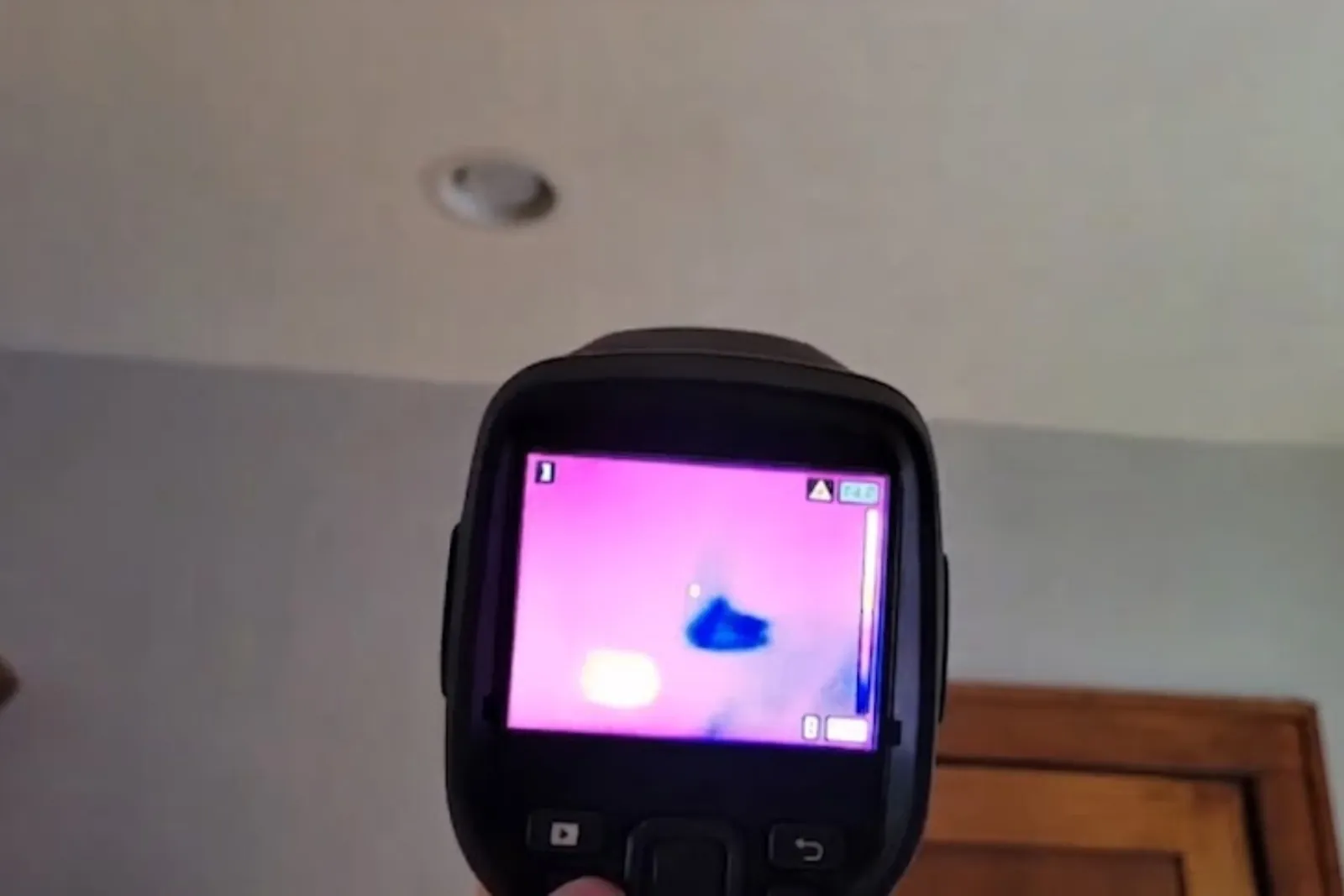
First, confirm there is a leak
Turn off every faucet, toilet and appliance, write down the meter reading, and wait 30 minutes without using water. If it moved, water is going somewhere. Then close the main shutoff in the basement and check again.
If the meter stops once the main is closed, the leak is inside the house, which is what this page covers. If it keeps moving, the leak is on the buried service line, covered on our water line repair page. A running toilet flapper is the most common invisible leak of all, so rule it out first with a little food dye added to the tank.
How we find leaks without tearing things up
| Method | What it finds | Where it helps most |
|---|---|---|
| Pressure testing | Whether a section of supply pipe is losing water | Isolating which branch has the leak. |
| Acoustic listening | Pressurized water hissing out of a pinhole or joint | Pipes in walls, floors and slabs. |
| Thermal imaging | Temperature differences from wet or hot-water areas | Ceilings, walls and radiant floors. |
| Moisture meters | How far water has spread in drywall or plaster | Mapping damage before repairs. |
Using more than one method narrows the leak to a small area. That keeps the opening in the wall or ceiling small. After the repair, the Ohio Plumbing Code, based on the 2021 International Plumbing Code (IPC), expects new water piping to hold test pressure before it is covered up again.
Where leaks hide in Hamilton houses
In older homes in German Village, Dayton Lane and Rossville, the usual suspects are corroded galvanized fittings, old shower valves behind plaster, and drain connections under clawfoot or built-in tubs. Plaster holds moisture differently than drywall, so stains can appear some distance from the actual leak.
In newer homes, leaks are more often at PEX crimp fittings, supply lines to toilets and faucets, and dishwasher or ice maker connections. If the leak turns out to be under a concrete floor rather than in a wall, our slab leak page explains that separate process.
What to do before we arrive
- Shut off the main if water is actively dripping or spreading.
- Photograph stains and any damaged ceiling or wall before touching them.
- Do not poke holes in a bulging ceiling unless water is ready to pour through, then put a bucket under it first.
- Keep electricity off in any room where water is near light fixtures or outlets.
Leak detection in Hamilton and nearby towns
We find leaks across ZIP codes 45011, 45013 and 45015. Owners of newer homes in Fairfield call when a finished basement ceiling shows a stain that has no obvious source.
What leak detection costs depends on
Finding the leak and fixing it are priced as separate steps, so you know what each costs.
- How many methods are needed to pinpoint the source.
- Size of the area being searched.
- Access through finished ceilings, tile or cabinets.
- The repair itself, quoted once the leak is found.
- Timing, since active leaks after hours cost more.
Many policies cover damage from a sudden hidden leak and sometimes the cost of accessing it, but not gradual leaks or the worn pipe itself. The report from a detection visit helps with a claim.
Want your real number? Call (513) 796-9381 and describe what you are seeing.
Hidden leak somewhere in the house? We can find it.
Call (513) 796-9381Leak detection questions
Turn everything off and watch the meter for 30 minutes. If it moves, water is escaping somewhere.
Usually only one small spot, once the leak has been pinpointed with testing and listening equipment.
Yes. A worn flapper can waste a large amount of water without any visible sign.
Yes. This service covers leaks in walls, ceilings and floors. Leaks under concrete floors need a separate slab leak process.
Some policies cover access costs for a sudden covered leak. Coverage varies, so check your policy wording.