Water Filtration Installation in Hamilton, OH
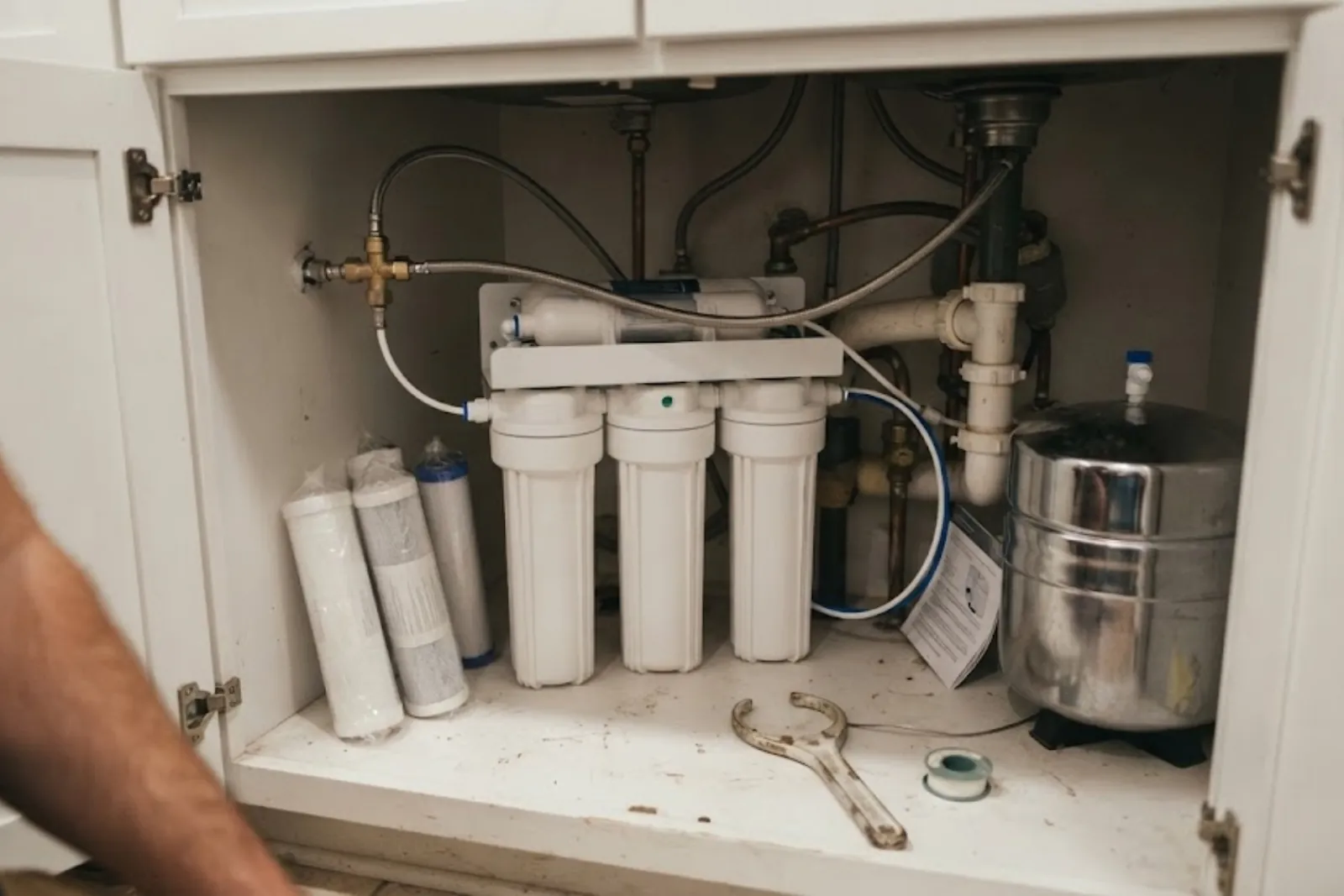
Water filtration installation in Hamilton, OH puts a filter where it does the most good. That may be a unit below the kitchen faucet for the water you drink, at the main line for the whole house, or at a well for iron and sediment. The right system depends on what you are trying to remove.
We start with what is actually in your water, not a sales list of contaminants. Call (513) 796-9381.
Start with what is in the water
Hamilton's water comes from wells about 210 feet deep in the Great Miami Buried Valley Aquifer, is lime-treated and filtered at the city's plants, and is disinfected with chlorine dioxide. The city publishes its test results every year in its water quality report.
The main concern for many older homes is not the treated water but the pipe it travels through. The city has published a service-line inventory map, and older addresses can still be served by lead lines. If that is your situation, a filter certified for lead reduction is a sensible step while the line itself is replaced, which our water line replacement page covers.
Look for certification, not claims
A filter should be certified to the specific standard for what you want removed. For lead, look for certification to NSF/ANSI Standard 53 with lead reduction listed. For taste and odor from disinfectant, NSF/ANSI Standard 42 applies. Reverse osmosis systems are certified under NSF/ANSI Standard 58.
Certification is printed on the box and listed in the certifier's public database. A filter that makes broad claims without a certification number is not one we would install.
Which type of system
| System | What it does | Best for |
|---|---|---|
| Under-sink carbon | Reduces taste, odor and, if certified, lead at one tap | Drinking and cooking water. |
| Reverse osmosis | Removes a wide range of dissolved substances | Drinking water where more removal is wanted. |
| Whole-house sediment and carbon | Filters all water entering the home | Wells and taste concerns throughout the house. |
| Iron and sediment filter | Removes iron staining and grit | Private wells in surrounding townships. |
Maintenance is part of the deal
- Change cartridges on the manufacturer's schedule, not when the water tastes off.
- Write the change date on the filter housing.
- Replace reverse osmosis membranes as recommended.
- Sanitize whole-house housings when changing cartridges.
An overdue filter can do worse than no filter. If hardness scale is the real problem, a water softener is the right tool instead.
Filters while a lead line is being replaced
Lead service line replacement can briefly disturb lead scale inside the remaining pipes. Water utilities commonly advise using a certified lead-reducing filter for drinking and cooking water for a period after a replacement and flushing the lines thoroughly. A pitcher or faucet filter certified for lead is an inexpensive way to cover that window.
Filtration in Hamilton and nearby
We install filters in ZIP codes 45011, 45013 and 45015. Well owners in Ross Township most often need sediment and iron filtration ahead of any drinking water filter.
What filtration costs depends on
Point-of-use filters and whole-house systems are priced very differently.
- System type: under-sink, RO or whole-house.
- What it must remove, based on testing.
- Installation location and drain needs for RO.
- Cartridge and membrane costs over time.
- Well pretreatment such as iron removal.
Water treatment equipment is not covered by homeowners insurance.
Want your real number? Call (513) 796-9381 and describe what you are seeing.
Want filtered water? Start with a real test.
Call (513) 796-9381Water filtration questions
The city treats and tests its water. A filter is most useful if your home has a lead service line or old plumbing, or for taste preference.
One certified to NSF/ANSI Standard 53 with lead reduction specifically listed.
It removes the widest range of substances for drinking water, but it wastes some water and needs a drain connection.
On the manufacturer's schedule. Mark the date on the housing.
No. A softener removes hardness. It does not remove lead or most contaminants.