Frozen Pipes on the Exterior Walls of Pre-1920 Hamilton Houses
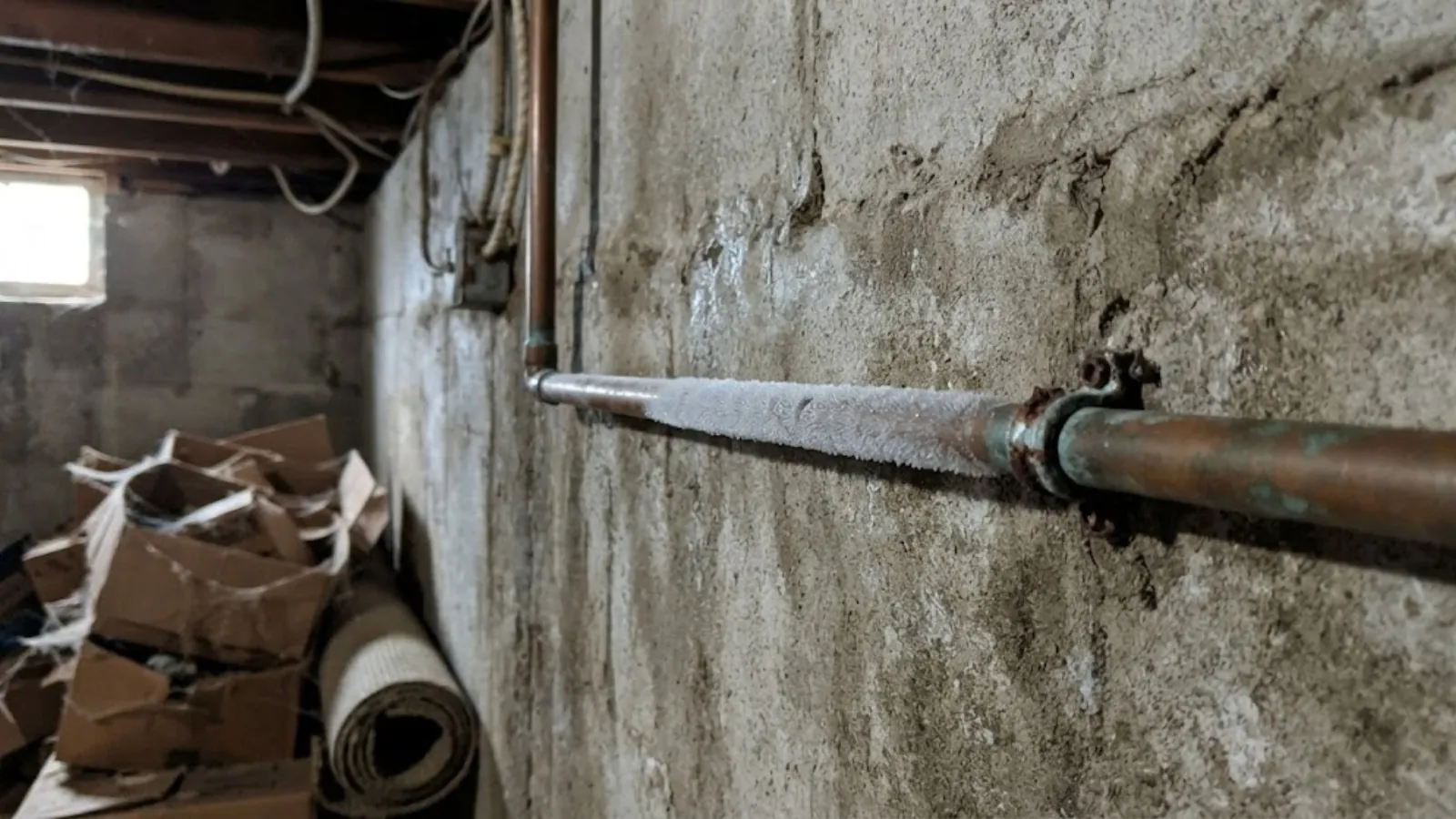
In older Hamilton houses, pipes most often freeze where plumbing was added after the house was built: kitchen sinks on outside walls, back-porch additions, enclosed porches turned into laundry rooms, and hose bibs. These spots got little insulation and sit where cold air reaches them first.
Southwest Ohio's winters are usually mild, which is exactly why freezes catch owners off guard. Here is where to look, how cold it can get, and how to stop the same pipe freezing every year.
How cold it actually gets
The region's 30-year average temperature for January is about 31 degrees, according to the National Weather Service, so most winter days never threaten a pipe. Arctic outbreaks are a different story. Cincinnati's all-time record low is 25 below zero, set on January 18, 1977, and January 19, 1994 reached 24 below.
Pipes freeze when the air around them stays below freezing for several hours, which in a poorly insulated exterior wall can happen well before outdoor temperatures reach single digits, especially with wind.
Where pipes freeze in old houses
| Location | Why it freezes | Typical fix |
|---|---|---|
| Kitchen sink on an outside wall | Supply lines run inside a cold wall cavity | Insulate, open cabinets, or reroute. |
| Back-porch or rear addition | Added later on a shallow foundation with little insulation | Insulate the crawl or reroute lines. |
| Enclosed porch laundry | Unheated space with exposed lines | Heat the space or move the lines. |
| Hose bib or sillcock | Hose left connected traps water inside | Remove hoses and use frost-free bibs. |
| Basement rim joist | Cold air leaks at the top of the foundation | Seal and insulate the rim. |
Houses in German Village, Dayton Lane and Rossville often have kitchens and bathrooms that were modernized decades after construction, which is why so many of these spots exist.
Signs a pipe has frozen
- One faucet gives a trickle or nothing while others work.
- Frost on an exposed pipe in the basement or crawlspace.
- A bulge or crack in a visible pipe or fitting.
- A toilet that will not refill.
If you see these, leave the faucet open, find your main shutoff, and warm the area gently. Never use an open flame. Our frozen pipe repair page covers safe thawing in detail.
Why the damage shows up later
Ice expanding in a pipe raises pressure between the ice plug and a closed faucet, which is where the pipe splits, often some distance from the ice itself. While it is frozen, the split does not leak. Once it thaws, water pours out.
That is why a burst often appears on the first warm afternoon after a cold snap. If a split has already sent water through a ceiling, the first step is shutting the main, then burst pipe repair to replace the damaged section.
Stopping the same pipe from freezing every year
Temporary measures, such as dripping a faucet and opening cabinet doors, help on the worst nights. The lasting fix is changing the conditions: insulating the wall cavity or crawlspace, sealing the rim joist, or moving the pipe to an interior wall.
The Ohio Plumbing Code, based on the 2021 International Plumbing Code (IPC), calls for water pipes in locations subject to freezing to be protected. A repair after a freeze is the right time to fix the underlying exposure rather than just the split.
Beyond the city
Older homes throughout the area share the problem. Near campus in Oxford, older rentals with back additions freeze in the same places, and vacant houses over winter break are a particular risk if the heat is set too low.
What to do before a cold snap
- Disconnect garden hoses and close any interior shutoff for outdoor faucets.
- On the coldest nights, leave outside-wall sink cabinets standing open.
- Seal drafts at the basement rim joist and around pipes that pass through walls.
- Keep the thermostat steady overnight rather than setting it far lower.
- Know where the main water shutoff is, and make sure it turns.
If you will be away, set the heat no lower than about 55 degrees and ask someone to check the house daily during a hard freeze.
Rerouting a line that freezes every year
When the same kitchen line freezes winter after winter, insulation alone may not fix it, because the wall cavity itself is too cold. The permanent answer is moving the supply lines so they come up through the floor from the heated basement into the sink cabinet, instead of running up inside the exterior wall.
That usually means a short new run of PEX from the basement ceiling, new holes through the cabinet floor, and new shutoff valves. It is a small job compared with repairing a split pipe and the water damage that follows. In older Hamilton houses, where kitchens were often added to rear additions over shallow foundations, it is one of the most effective freeze fixes there is.
Heat tape is another option for pipes that cannot be moved. It must be a product rated for the pipe material and installed per its instructions, and it should never be wrapped over itself.
Frost-free sillcocks and why they still freeze
A frost-free sillcock has a long stem that closes the valve inside the heated house, so the part outside can drain. It only works if the hose is removed. A connected hose traps water in the stem, which freezes and splits it, and the leak shows up in spring when someone turns the faucet on and water runs inside the wall.
It also has to slope slightly downward toward the outside to drain. Older installations are sometimes level or sloped the wrong way. If an outdoor faucet has split once, replacing it with a correctly pitched frost-free model and remembering to remove the hose each fall usually ends the problem.
Frequently asked questions
When the air around them stays below 32 degrees for several hours. Exposed exterior-wall pipes are most at risk in the teens and below.
On the coldest nights, yes, for faucets on exterior walls. Moving water resists freezing.
Many insurers and utilities suggest no lower than about 55 degrees, with cabinet doors on exterior walls left open.
Sometimes, but it may already be split. Check carefully after it thaws.
Yes, although PEX often stretches rather than splitting. Its fittings can still crack, so the same prevention applies.
Warm the room, open the cabinet or nearby access, and use a space heater at a safe distance. If you cannot reach it, call for help rather than cutting into the wall blindly.