Is Your Hamilton Water Line Lead? Reading the City Map and Who Pays
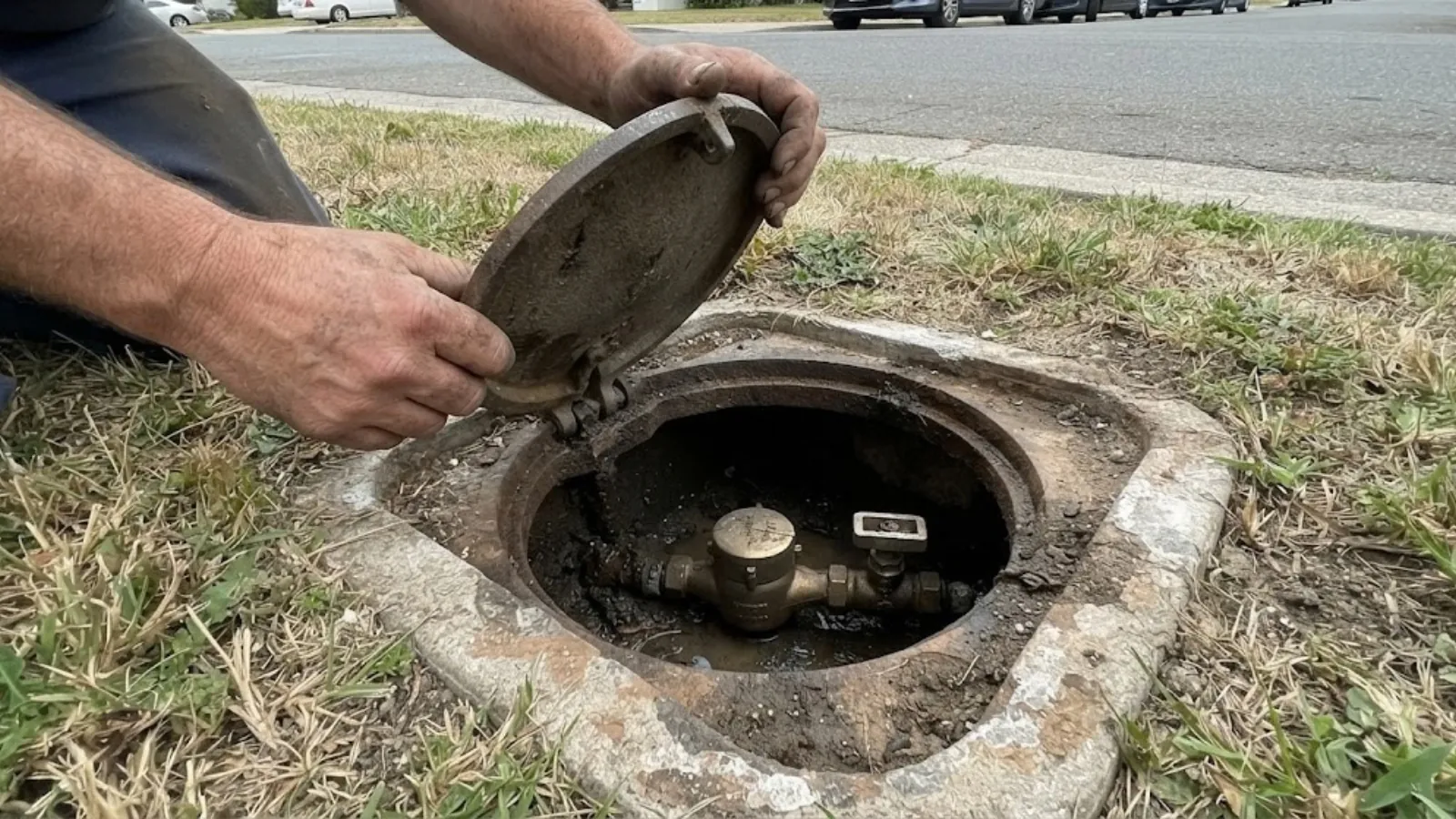
If you live in an older Hamilton home, your water may reach the house through a lead service line. The city has published a public map estimating the pipe material for each address. The rule on who pays is straightforward. The city covers the public stretch from the main to the curb stop, and the owner is responsible for the private stretch from the curb stop into the house.
This guide explains how to read the map, how to check the pipe yourself in two minutes, what replacing the private side involves, and how to protect your drinking water in the meantime.
Why lead lines exist in Hamilton at all
Lead was a common material for small water service lines in American cities through the early 1900s because it was flexible and easy to bend around obstacles. Hamilton's water utility dates to 1884, and many of the city's oldest homes, in German Village, Dayton Lane, Rossville and the blocks around them, were connected during that era.
The water leaving Hamilton's treatment plants is tested and meets federal standards. The concern is contact with the pipe on the way to your tap, especially when water has sat still for hours. That is why the federal Lead and Copper Rule now requires utilities to inventory every service line and replace lead ones over time.
How to read the city's service line map
Hamilton built its service line inventory using city records, and where records were missing it worked with BlueConduit, using a prediction model to estimate each line's likely material. Addresses are typically shown as lead, galvanized requiring replacement, non-lead, or unknown.
Treat the map as a strong starting point, not the final word. A predicted material can be wrong in either direction, and the public side and private side of the same address can be different materials. Customers with known or possible lead lines were also notified by mail as part of the program.
| Map shows | What it likely means | What to do next |
|---|---|---|
| Lead | Records or the model point to lead | Confirm at the meter, then plan private-side replacement. |
| Galvanized requiring replacement | Steel pipe that may have been downstream of lead | Plan replacement, it is treated like lead under the rule. |
| Unknown | No reliable record either way | Check the pipe yourself and have it confirmed. |
| Non-lead | Records show copper or plastic | Still worth a quick look if the home is very old. |
Check your pipe in two minutes
- Find where the water line comes through the basement wall, usually on the street side, before the meter.
- Gently scratch the pipe surface with a key or coin.
- Lead scratches easily and shows a shiny silver color underneath a dull gray surface.
- Hold a refrigerator magnet to the pipe. It will not stick to lead or copper, and it will stick to galvanized steel.
- Copper shows a penny color where scratched.
- Photograph what you find and note it with your address.
If you see lead, or you cannot tell, that is the point to have it confirmed and priced rather than guessing.
Who pays for which side
Utility responsibility in Hamilton typically stops at the curb-stop valve near the property line. Hamilton has announced funding to replace lead lines on the public side, from the water main to the curb stop. The private side, from the curb stop into your basement, stays with the homeowner to fix or renew.
Timing matters. Replacing only the public half of a lead line can disturb the remaining lead for a period afterward. Try to replace the private side when the city works on your street. That avoids a partial replacement and shares the trench and shutoff. It also usually costs less than doing it separately later.
What replacing the private side involves
The private line runs underground from the curb stop to where it enters your basement. It can be replaced by open trench, by dragging a new line along the old route from a small pit at each end, or by boring a new path under a driveway or walk. The new line is usually type K copper or polyethylene service tubing rated for buried drinking water.
The Ohio Plumbing Code, based on the 2021 International Plumbing Code (IPC), requires water service pipe to be protected from freezing, so it is buried below frost depth. A new shutoff valve goes in where the line enters the house. Hamilton requires a permit, pulled by a contractor who holds a city Master Registration.
Our page on water line repair and replacement in Hamilton covers the methods and what sets the price in more detail.
Protecting your drinking water until the line is replaced
Hamilton's own annual water quality report gives the standard advice. When water has been sitting for several hours, run the tap for 30 seconds to two minutes, until it turns noticeably colder, before using it for drinking or cooking. Use cold water, never hot, for anything you will drink or cook with.
A filter certified to NSF/ANSI Standard 53 for lead reduction adds another layer of protection, and it is especially useful for households with infants or pregnant family members. A certified lead-reducing filter under the kitchen sink is inexpensive and covers the period before and just after a replacement.
If your home is outside Hamilton
Neighboring communities run their own water systems, with their own inventories and rules. Fairfield, for example, operates a separate utility with its own wells and treatment plant. If you live outside the city, check with your own water supplier for its map and program details.
What to do if the map says lead and you have young children
Households with infants, young children or someone who is pregnant should act sooner rather than later. Lead exposure matters most for those groups, and the steps below cost little while the line is being scheduled for replacement.
- Use only cold water from a flushed tap for drinking, cooking and mixing formula.
- Install a filter certified to NSF/ANSI Standard 53 for lead reduction on the kitchen tap.
- Clean faucet aerators every few months, since particles collect there.
- Ask your pediatrician whether a blood lead test is recommended.
- Have a certified laboratory test your tap water. Ohio EPA lists certified labs.
How long replacement takes from first call to finished
Most private-side replacements follow the same sequence. First, someone confirms the material at the basement wall. Next comes measuring the run and choosing the method, since a pull-through or bored line avoids trenching across a mature lawn or driveway. The contractor pulls a permit and requests Ohio 811 utility marks, which usually take a few business days.
The work itself is typically one day. The crew disconnects the old line at both ends, installs and pressure-tests the new one, and adds a shutoff valve where it enters the basement. After replacement, flush every cold tap for several minutes, starting with the lowest floor, and keep using a filter for a period afterward, since disturbed scale in the remaining plumbing can release particles for a while.
If the city has already scheduled work on your street, contact the water department about timing so both sides get replaced close together.
Frequently asked questions
The treated water meets federal standards. The risk in some older homes comes from the service line and plumbing it passes through, which is why flushing and a certified filter are recommended where lead is present.
Usually not, since it is a planned replacement of an aging component rather than sudden damage.
For most homes, part of one day.
Yes, but coordinating with the city's public-side work avoids a partial replacement and usually saves money.