Well and Septic in Ross and Hanover Townships: Plumber, Health District or Well Contractor?
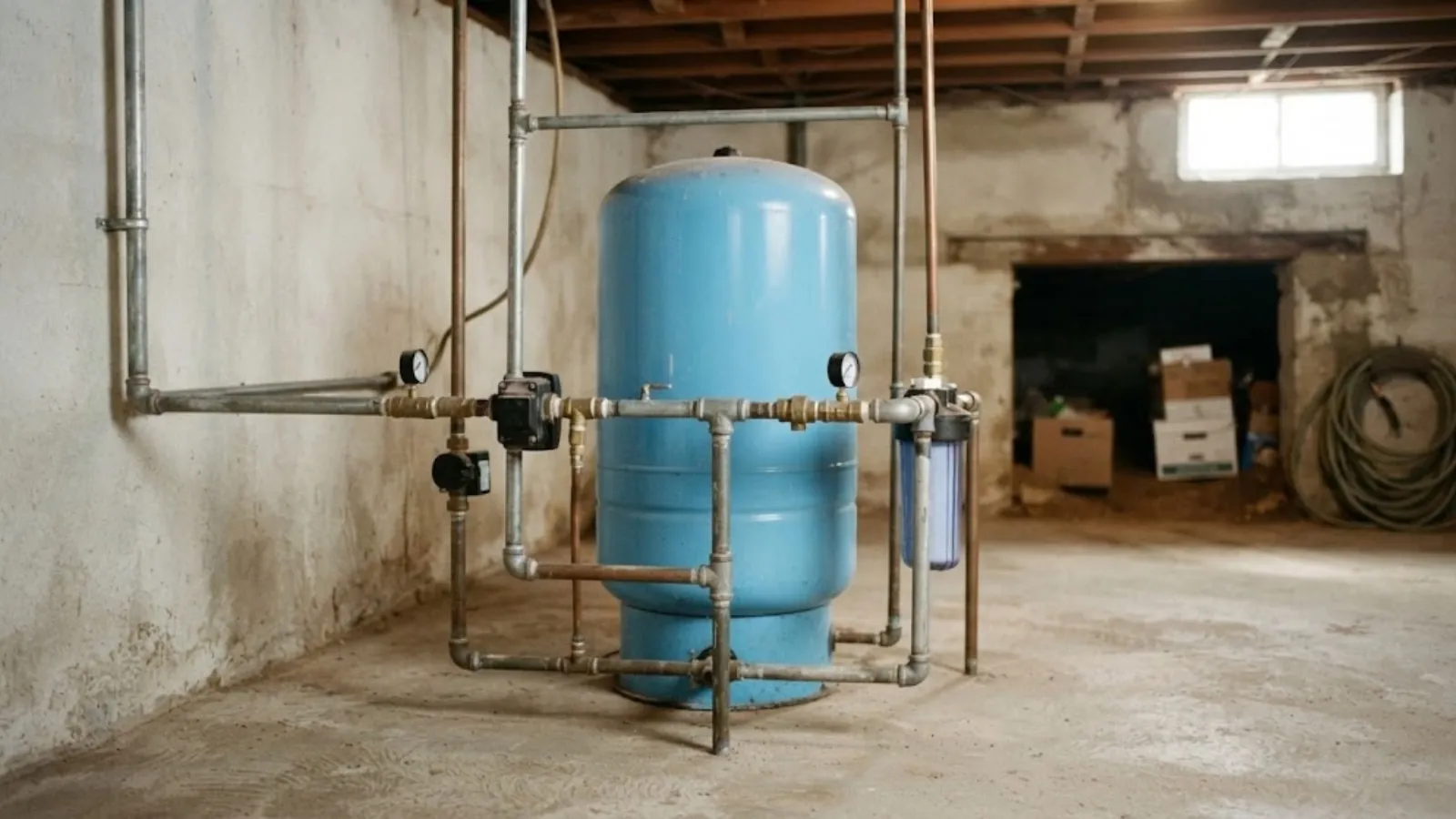
On a rural property with a private well and septic system, problems split three ways. A plumber handles the plumbing inside the house, water heaters, softeners, filters and the pressure tank. A registered private water systems contractor handles the well itself and its pump. The Butler County General Health District handles permits and oversight for septic systems and private water systems.
Knowing which is which saves time and money. Here is a practical guide for owners in Ross, Hanover and the other townships around Hamilton.
Who handles what
| Problem | Who to call first | Why |
|---|---|---|
| No water, pump will not run | Well contractor, or a plumber to check the pressure switch first | The pump is in the well. The switch and tank are in the house. |
| Pump cycles on and off rapidly | Plumber | Usually a waterlogged pressure tank. |
| Orange stains, rotten egg smell | Plumber for treatment, lab for a water test | Iron and sulfur are treated in the house. |
| Water heater, faucets, drains | Plumber | Standard household plumbing. |
| Septic backing up into the house | Septic pumper, then plumber if the house drain is blocked | The tank may be full, or the line to it clogged. |
| New septic system or major repair | Health district and a registered installer | Requires permits and oversight. |
The well system, piece by piece
A typical private water system has a submersible pump in the well, a buried line to the house, a pressure tank and a pressure switch in the basement or a well house, and often a softener or iron filter. The pump pushes water into the pressure tank, which holds it under pressure so the pump does not run every time a tap opens.
When the tank loses its air charge, it becomes waterlogged and the pump starts and stops constantly, which wears it out fast. That is a household-side repair. Pulling the pump out of the well is specialized work that Ohio's private water system rules, in Ohio Administrative Code Chapter 3701-28, assign to registered contractors.
Testing well water
No utility tests a private well. The owner does. A yearly test for bacteria is a sensible minimum, along with periodic tests for nitrate, hardness and iron. After flooding or any work on the well, test again.
Well water around Hamilton comes from the same sand and gravel aquifer the cities use, but without their treatment, so it is usually much harder and often carries iron. A filtration system, frequently paired with a softener, handles those in the house.
Septic systems and the house drain
A septic system has a tank that separates solids and a leach field that disperses liquid into the soil. The Butler County General Health District oversees sewage treatment systems in the county. Tanks need pumping on a schedule based on size and household use, often every few years.
If toilets and drains slow down throughout the house, the tank may be full or the line from the house to the tank may be blocked. A septic company pumps the tank. A plumber clears the house drain. Our drain cleaning page explains how a blocked building drain is cleared and inspected.
- Keep a record of when the tank was last pumped.
- Avoid grease, wipes and large amounts of food waste down drains.
- Keep vehicles and heavy equipment off the leach field.
- Watch for soggy ground or strong odors over the field.
When sewers arrive
Butler County has extended sanitary sewers into some formerly septic areas, including the downtown Ross service area. When a home connects, the old tank is abandoned according to health district requirements and a new building sewer runs to the public line. The Ohio Plumbing Code, based on the 2021 International Plumbing Code (IPC), governs the new connection, and it is permitted and inspected.
Old drain lines from the septic era sometimes remain in use after the conversion. If they sag or crack, they may need attention even though the house is now on sewer.
Local context
Our page on plumbing in Ross Township covers the seasonal problems owners there see most, from frozen outbuilding lines to hard well water.
What to do when the water stops on a well
- Check the breaker for the well pump and the pressure switch.
- Look at the pressure gauge near the tank. Zero with the pump off suggests a power or pump problem.
- If the pump clicks on and off rapidly, the pressure tank may be waterlogged.
- Do not repeatedly reset a tripped breaker, which can damage the pump.
- Call with what the gauge reads and whether you hear the pump.
Those details usually tell whether the fix is in the house, such as a switch or tank, or down the well.
Buying a rural home on a well and septic
A rural home adds two systems to the usual inspection. For the well, ask for recent water test results or have a test done, including bacteria and nitrate, and find out the age of the pump and pressure tank. For the septic system, ask when the tank was last pumped and whether it has had repairs, and consider an inspection by a qualified septic professional.
The Butler County General Health District keeps records on permitted sewage treatment systems and private water systems, and those records can show when a system was installed. Treat missing records as a reason to inspect more closely, not less.
Protecting a well from contamination
The top of the well casing should sit above ground with a sealed, vermin-proof cap, and surface water should drain away from it. Chemicals, fuel and fertilizer should be stored well away from the wellhead. After any flood that reaches the well, the water should be tested before drinking, and the well may need to be disinfected by a qualified contractor.
Frequently asked questions
A plumber can diagnose the pressure tank, switch and household side. Pulling or replacing the pump in the well is work for a registered private water systems contractor.
The Butler County General Health District oversees sewage treatment systems outside city sewer service.
It depends on tank size and household size, often every three to five years.
At least yearly for bacteria, and periodically for nitrate, hardness and iron.
The owner arranges it, using a certified laboratory. No utility tests private wells.
Often, yes. Ask your water provider about connection requirements and costs.